
Acts of Listening
Thursday 24 – Saturday 26 September 2026
Acts of Listening, 2026
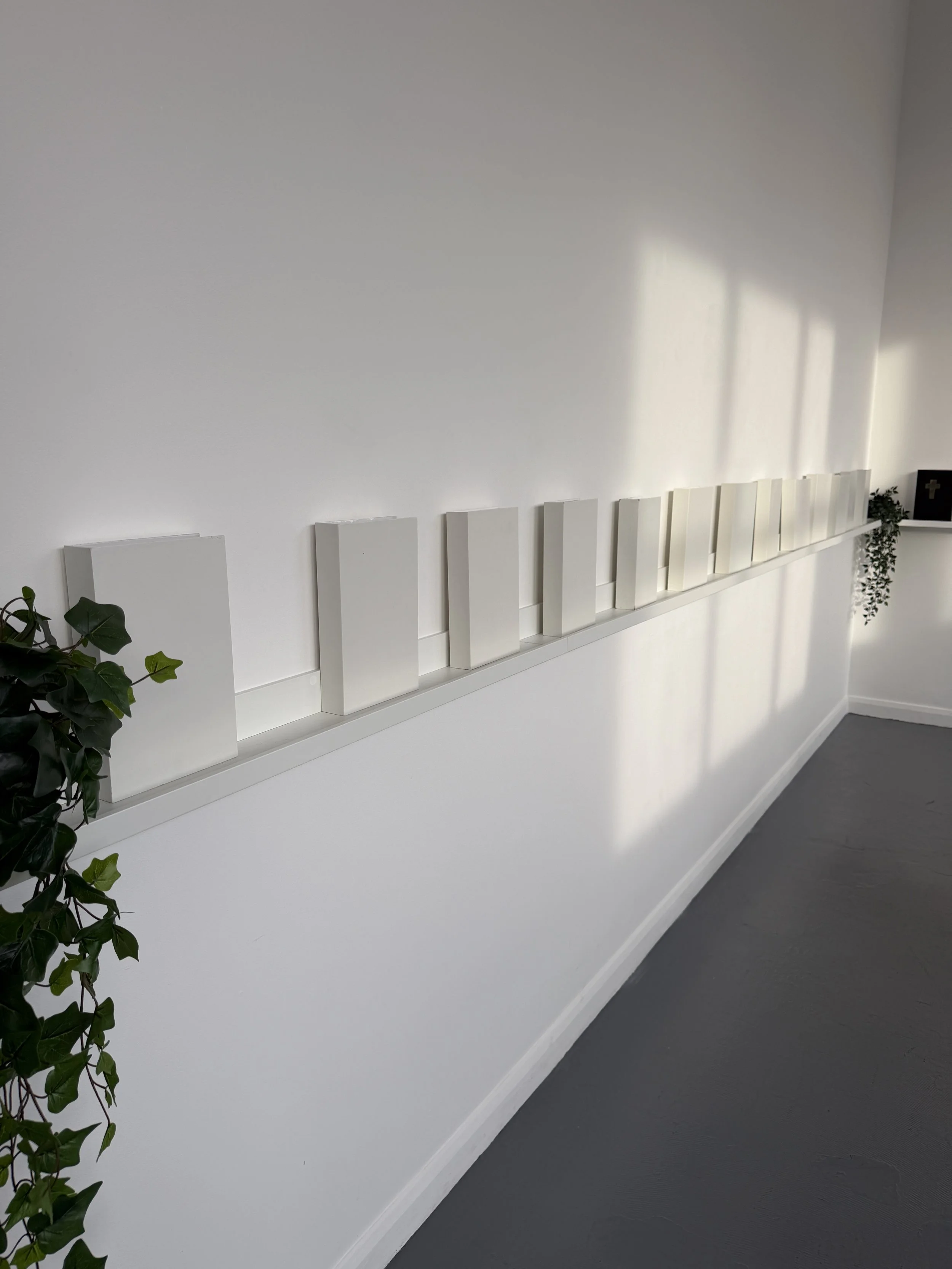
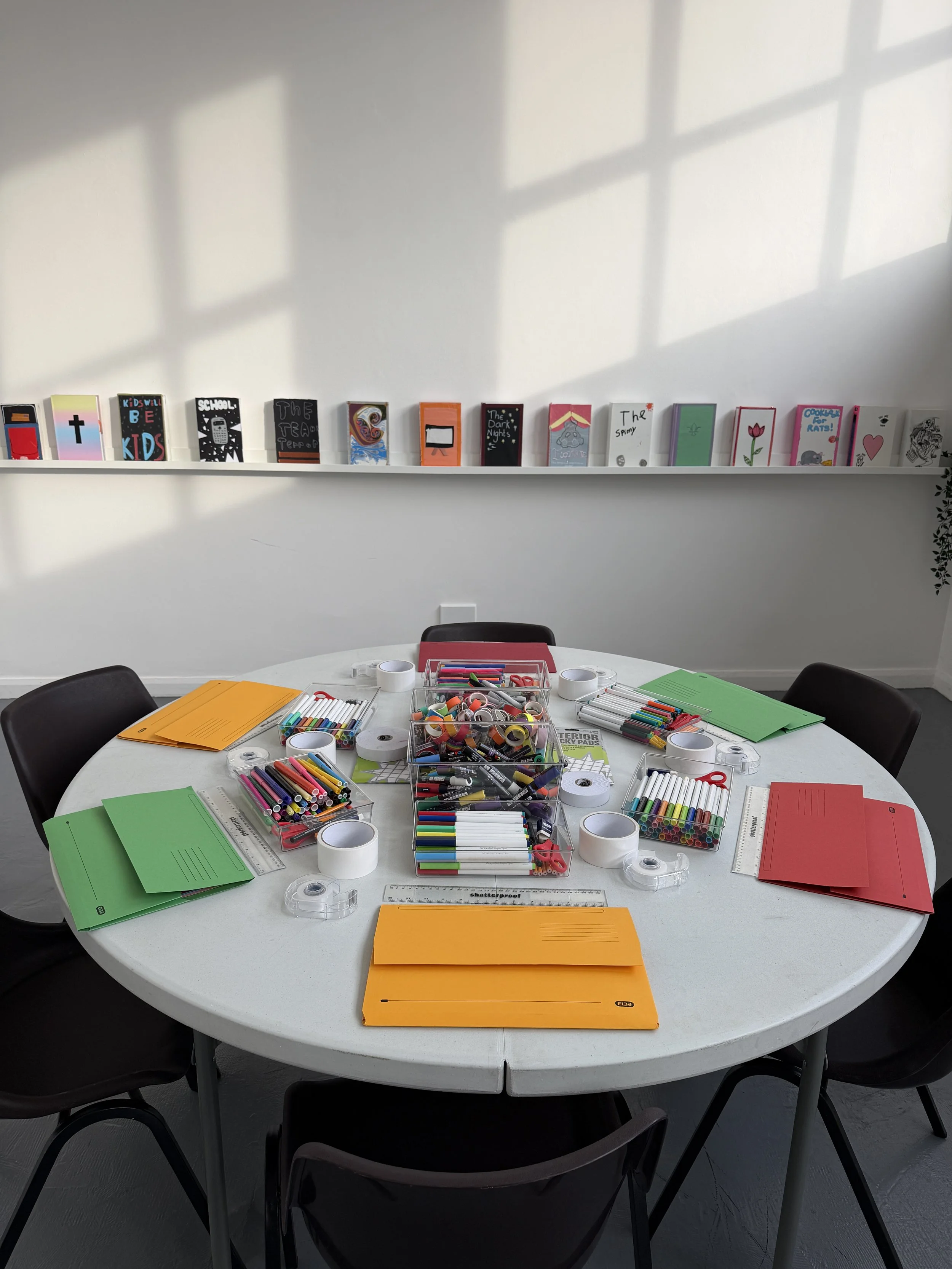
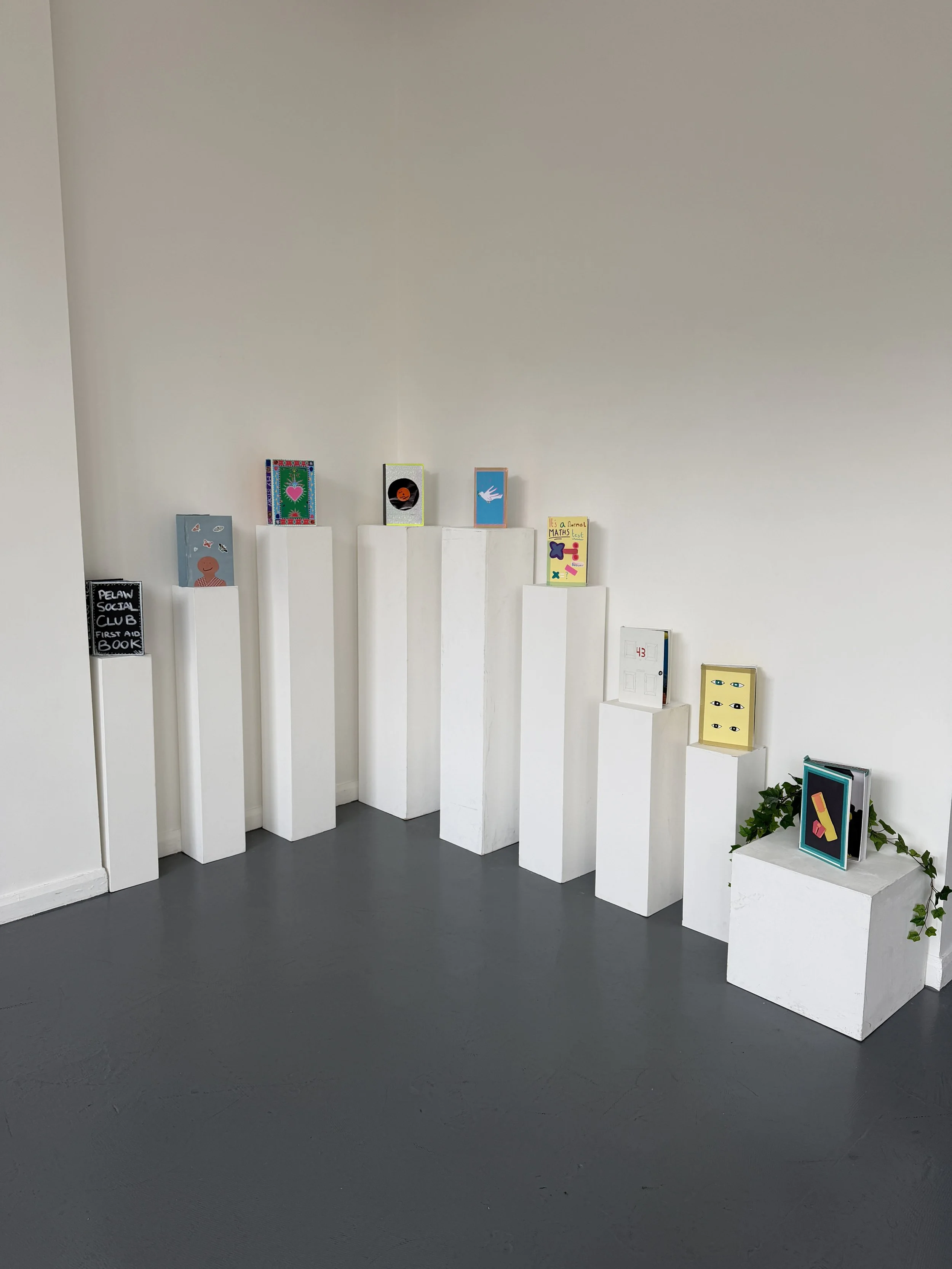
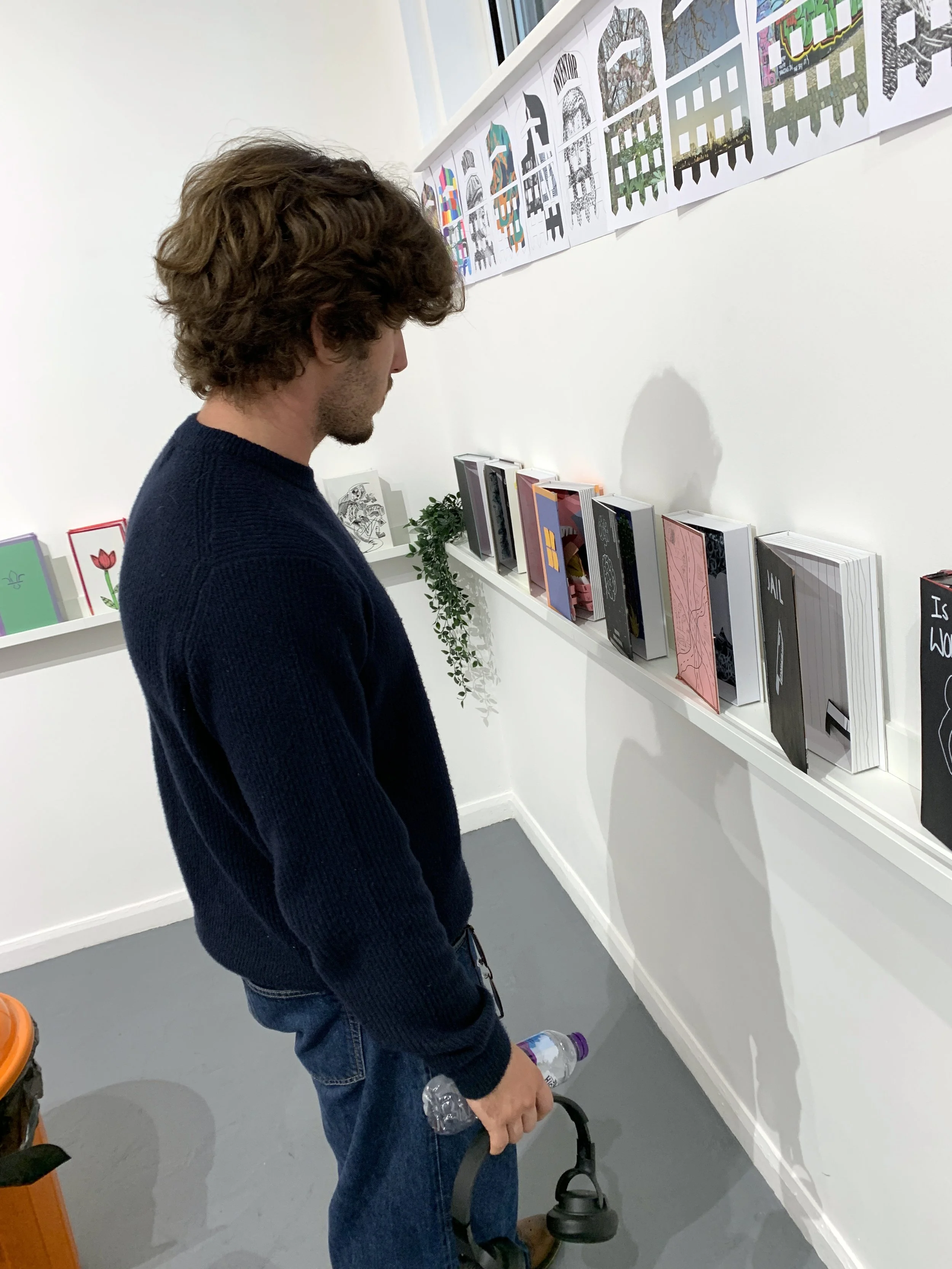
‘Acts of Listening’ brings together a growing collection of artists’ books created through community workshops exploring identity, choice, wellbeing and belonging. Using collage, sculpture, writing, found materials and hidden narratives, each book becomes a personal space for reflection, communication and expression.
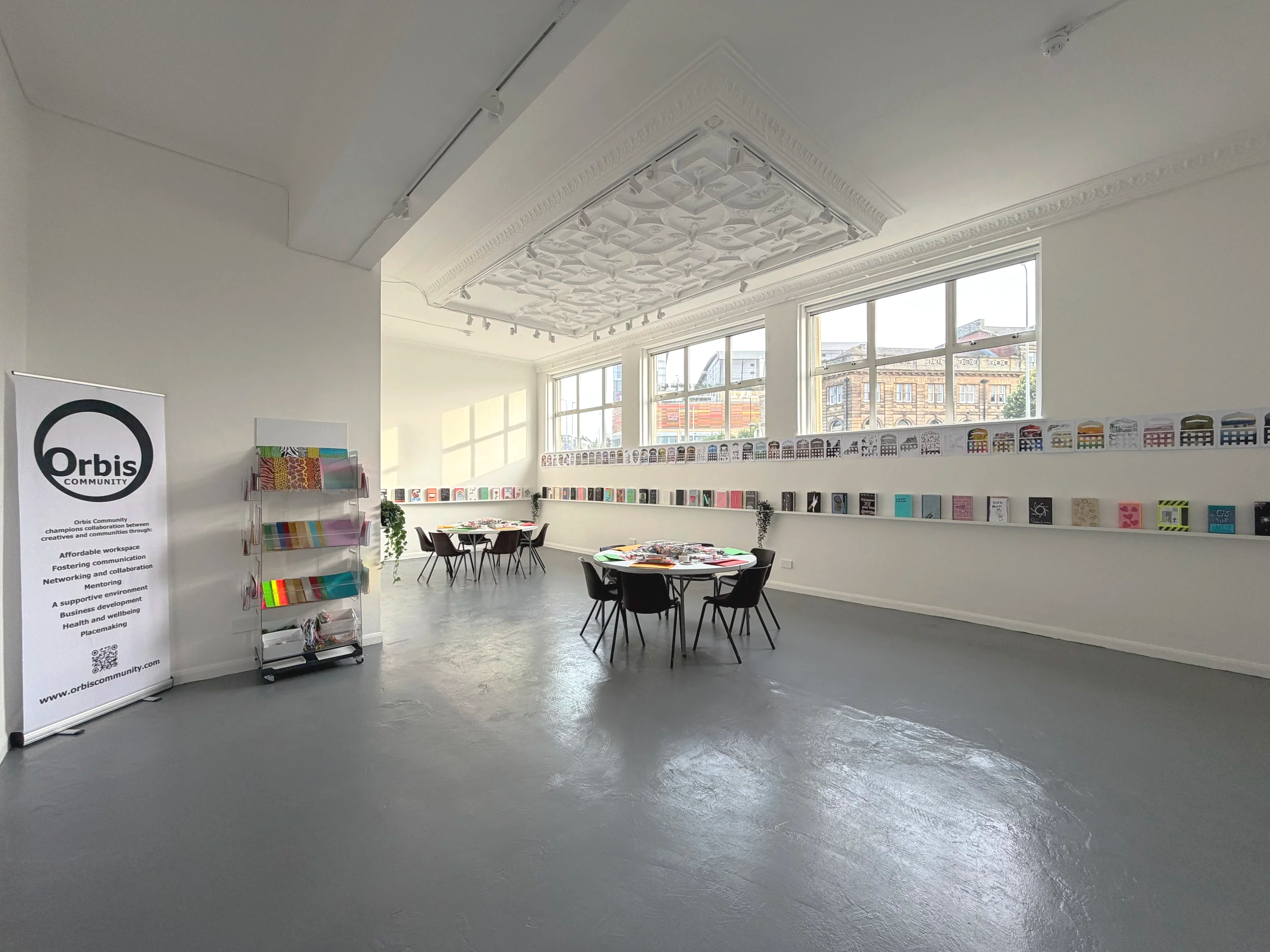
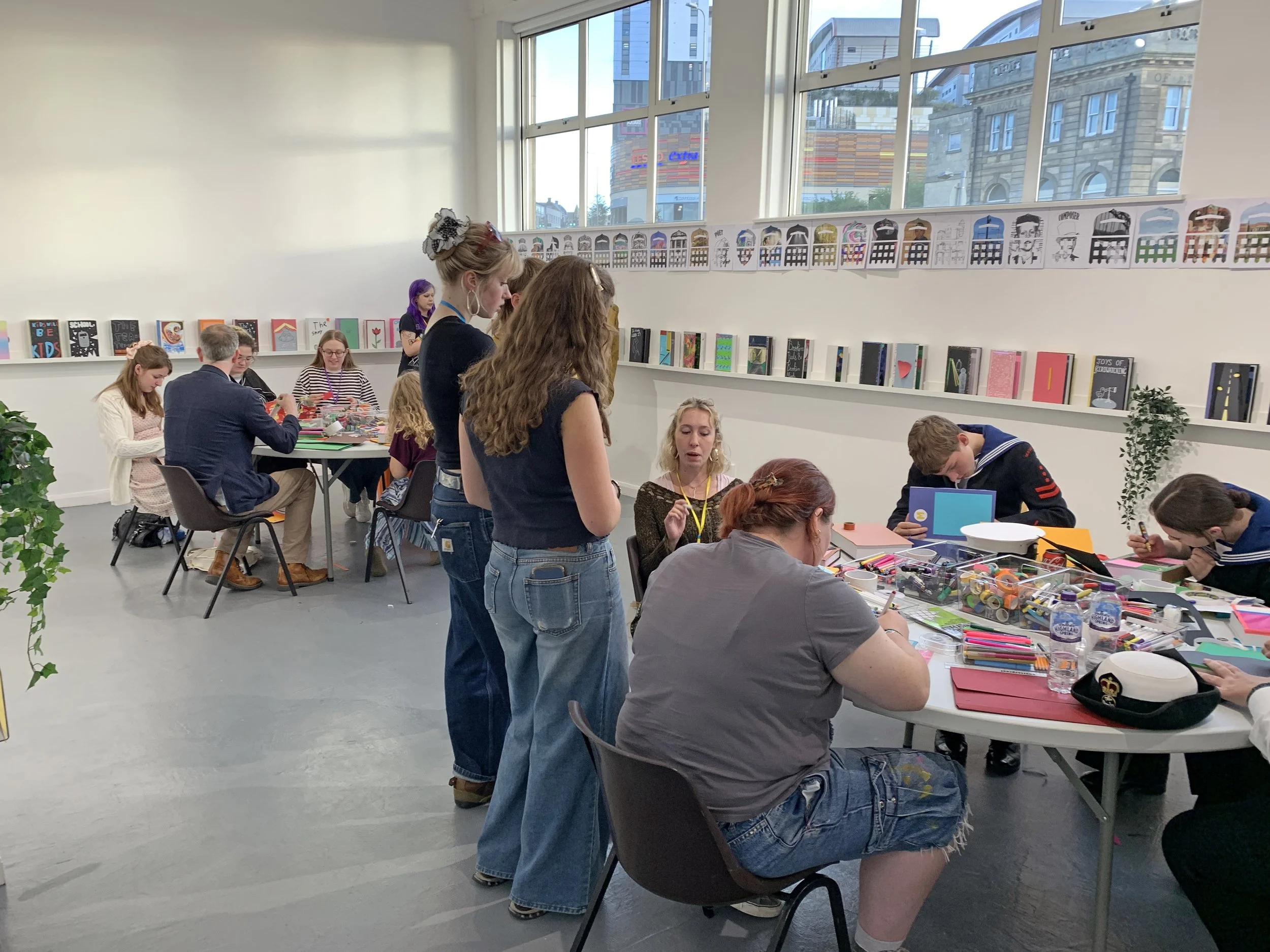
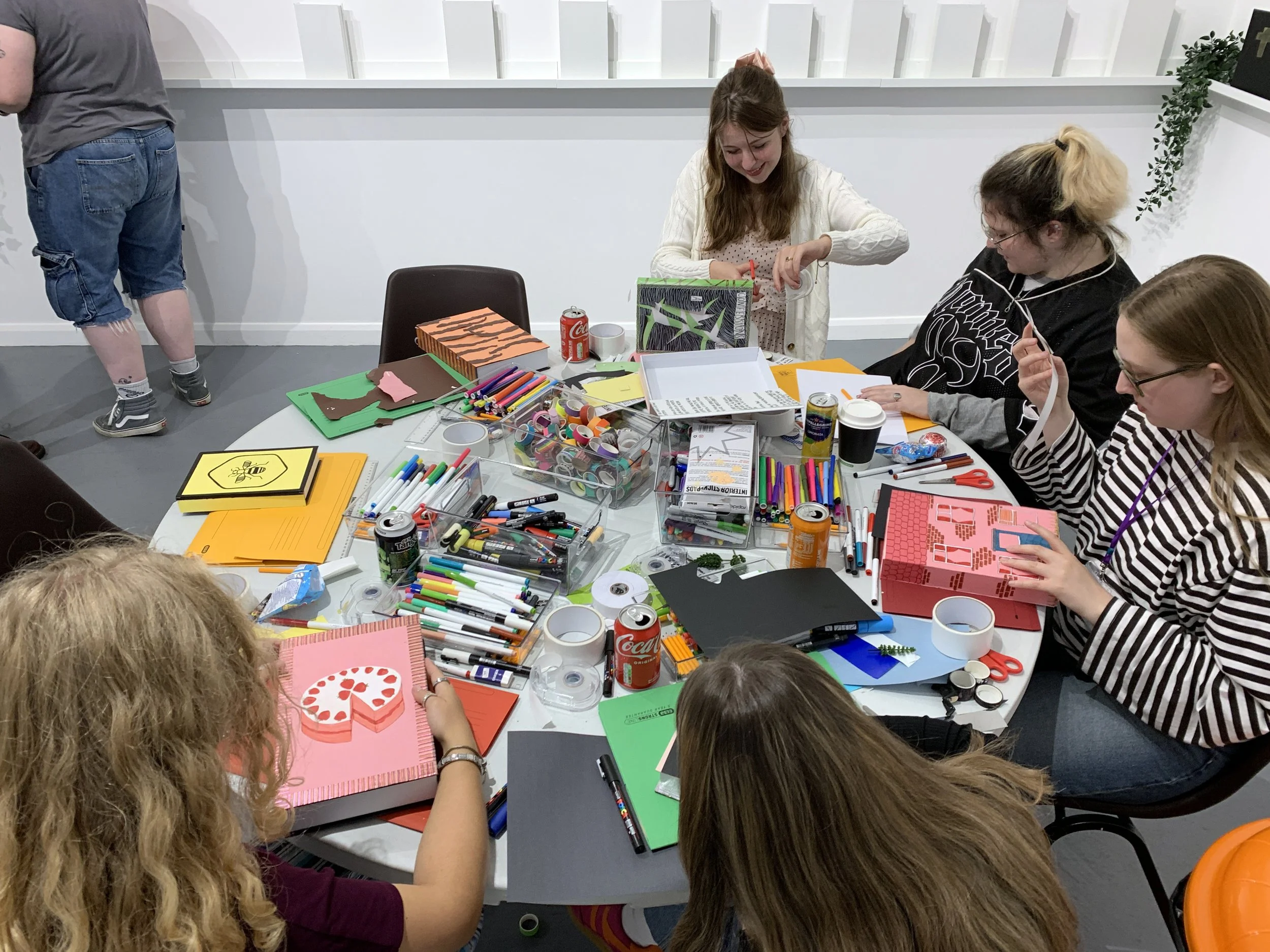
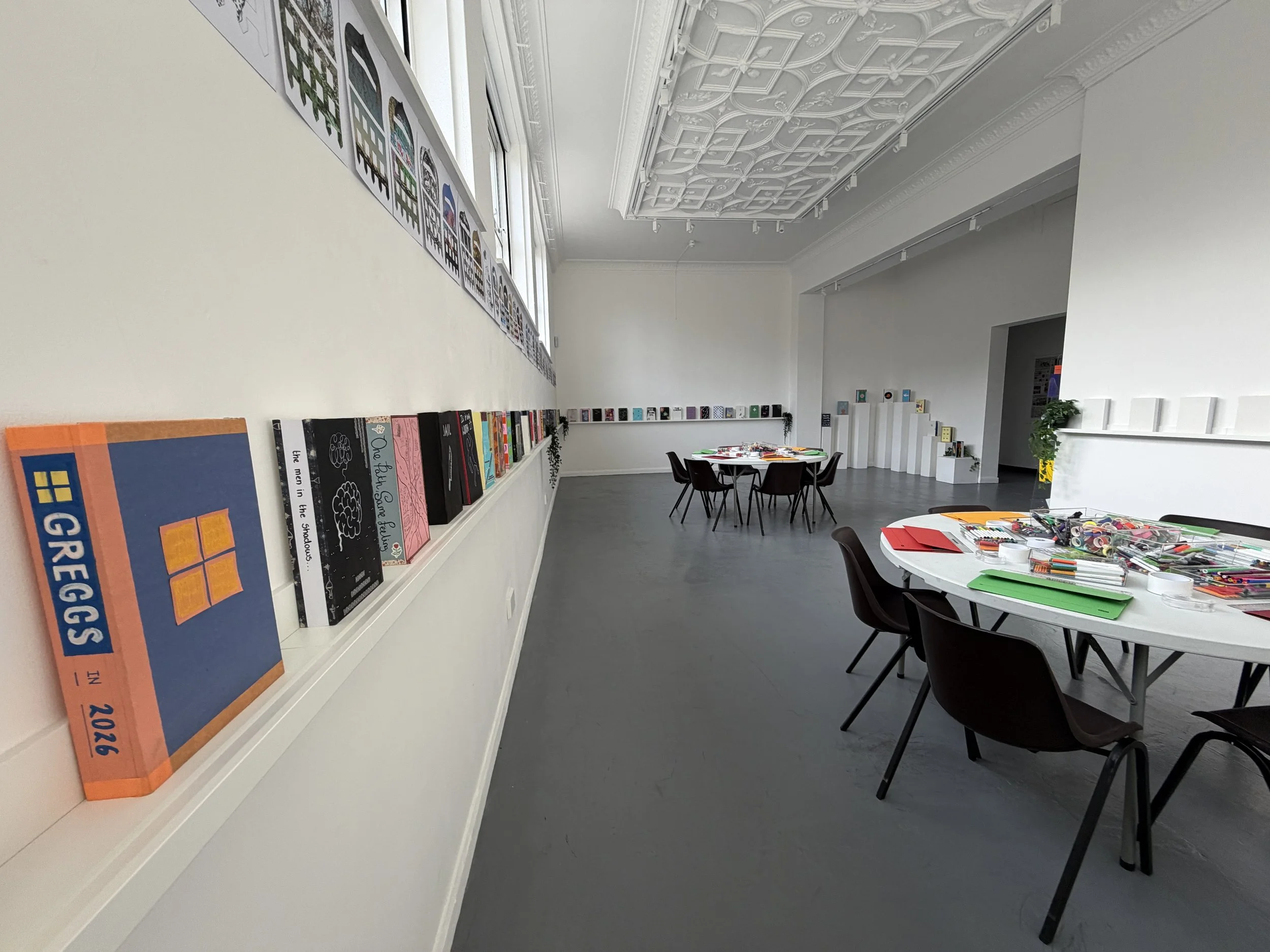
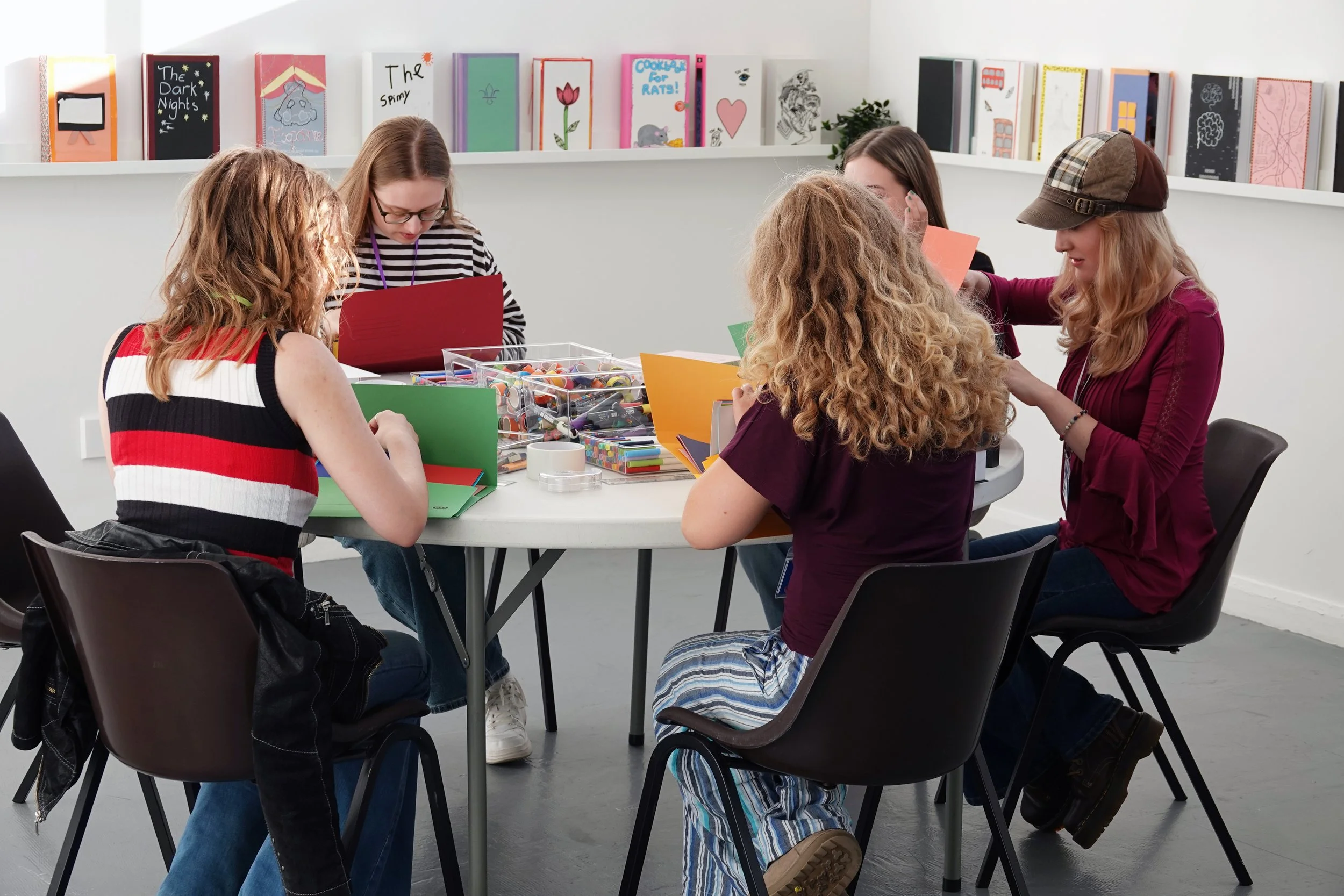
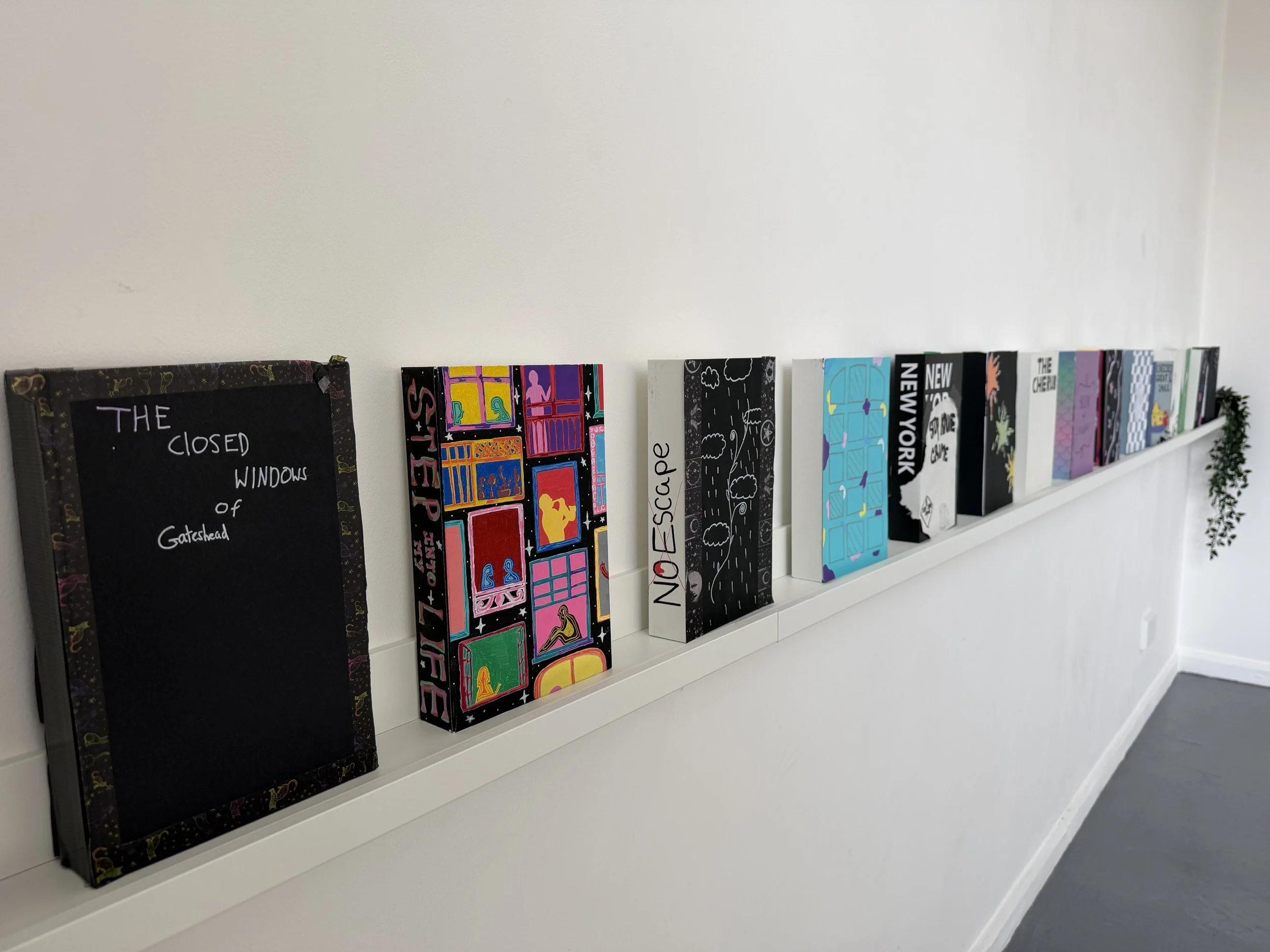
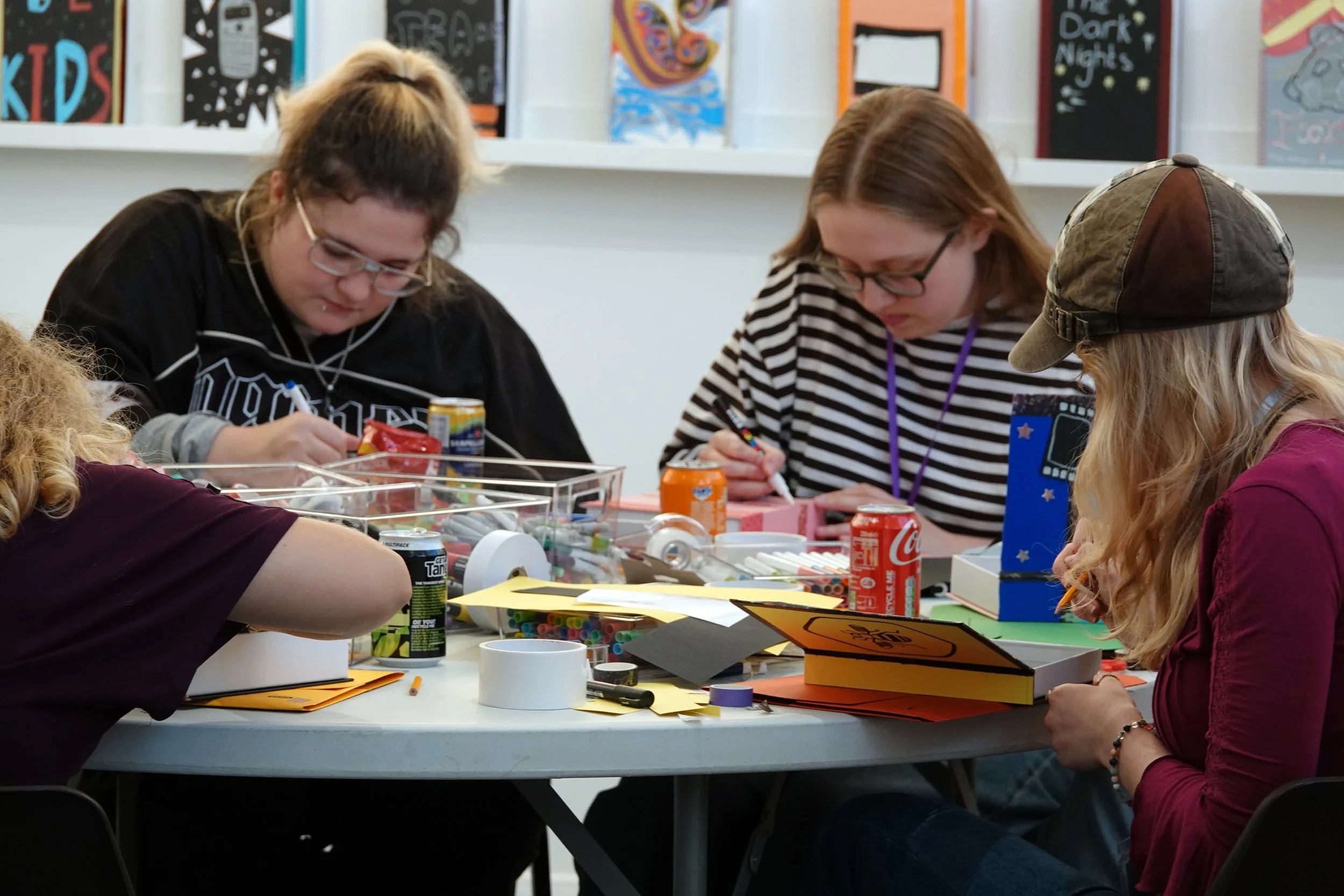
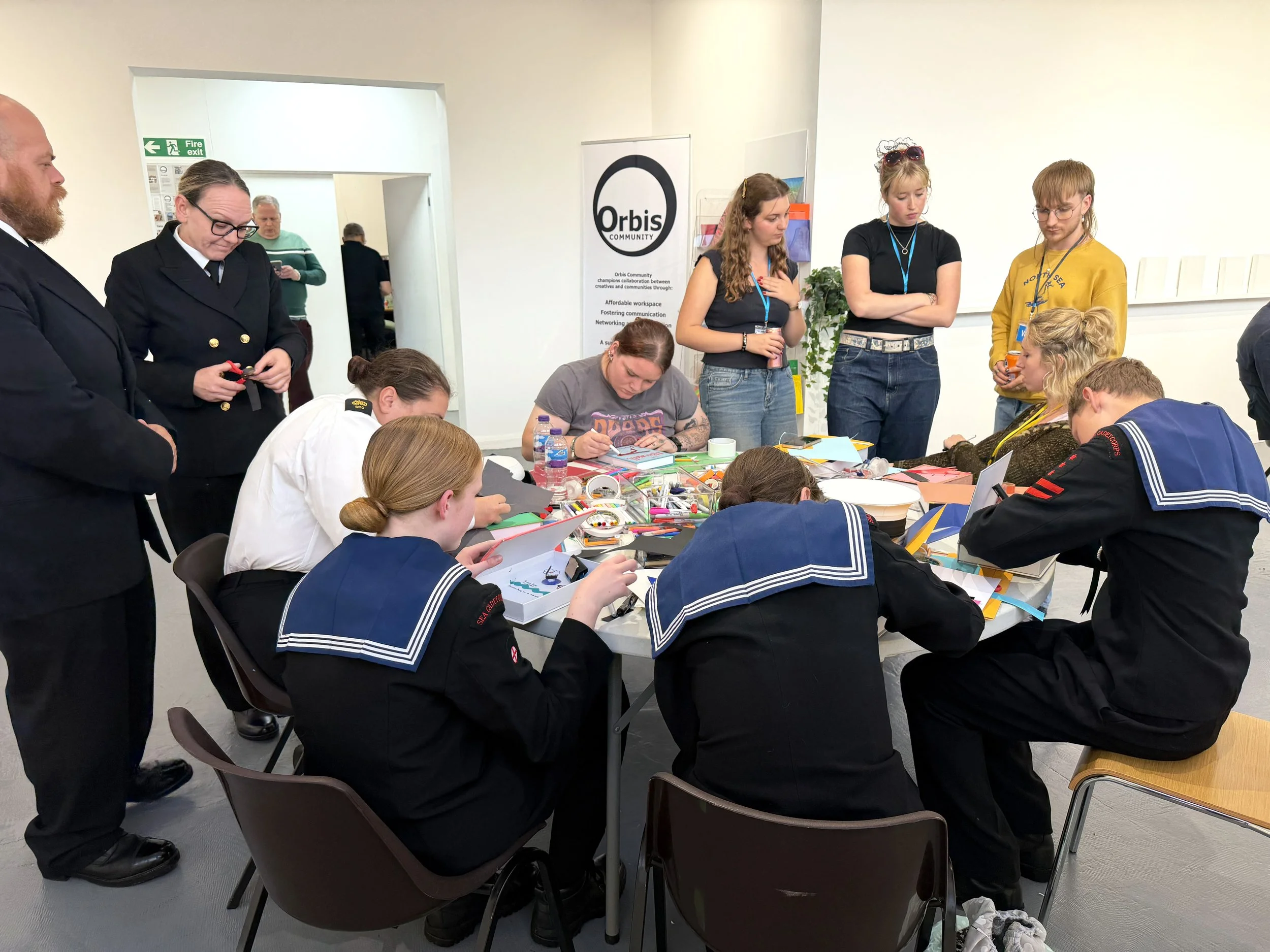
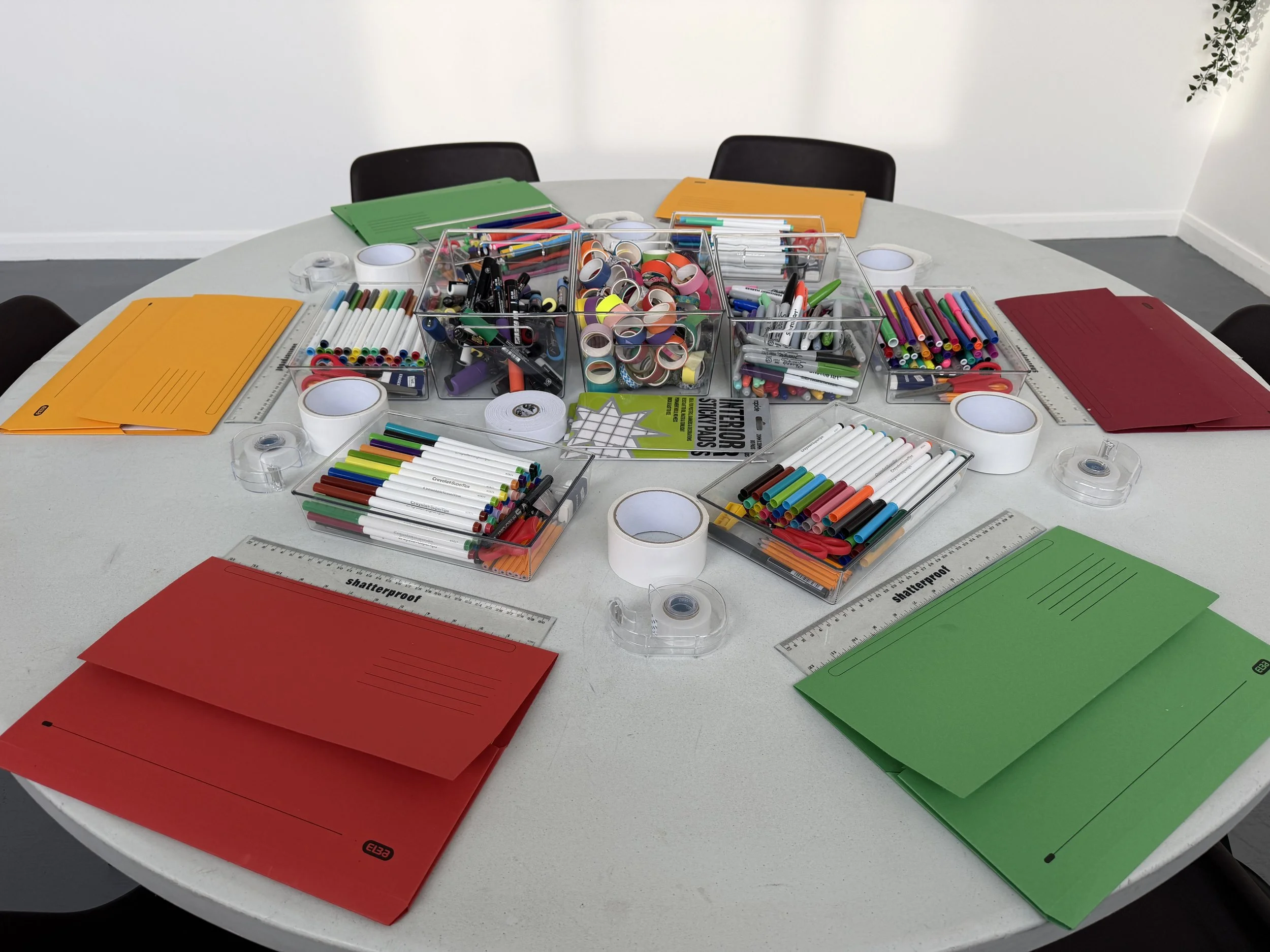
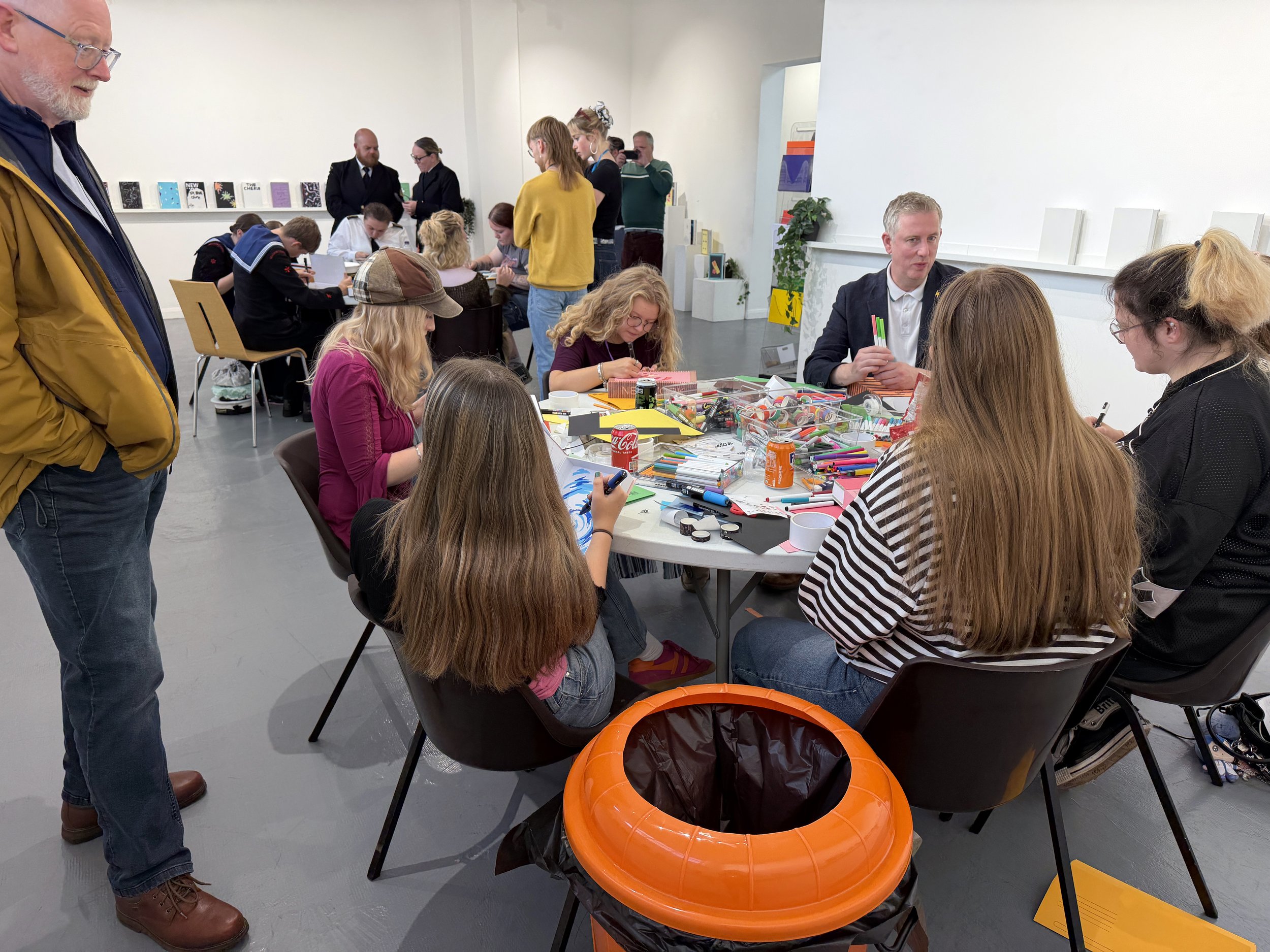
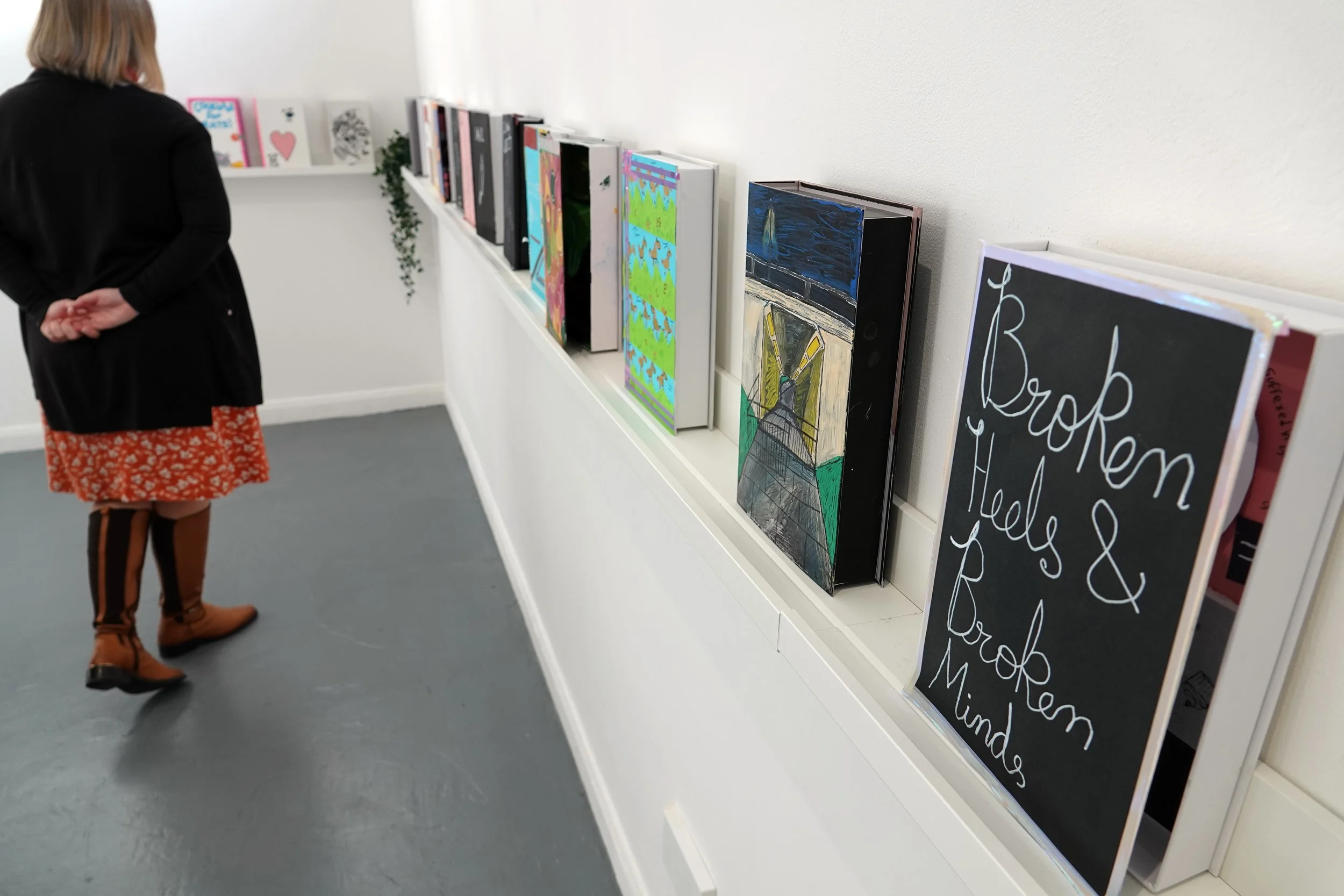
Together, the works form a collective library, an archive of voices, thoughts and perspectives. The exhibition invites visitors to slow down, look closely and consider the stories, emotions and experiences that may exist beneath the surface of everyday life. It asks us to reflect on the value of listening, to ourselves, to one another and to the communities we share. Visitors are invited to contribute to the project during exhibition hours.
‘Acts of Listening’ coincides with Behaviour Awareness Week (BAW), which was established with the purpose of fostering awareness and a deeper understanding of behaviour in children and young people. BAW serves as a platform to encourage educators, parents, policymakers, and communities to rethink their approaches to managing behaviour in children and young people.
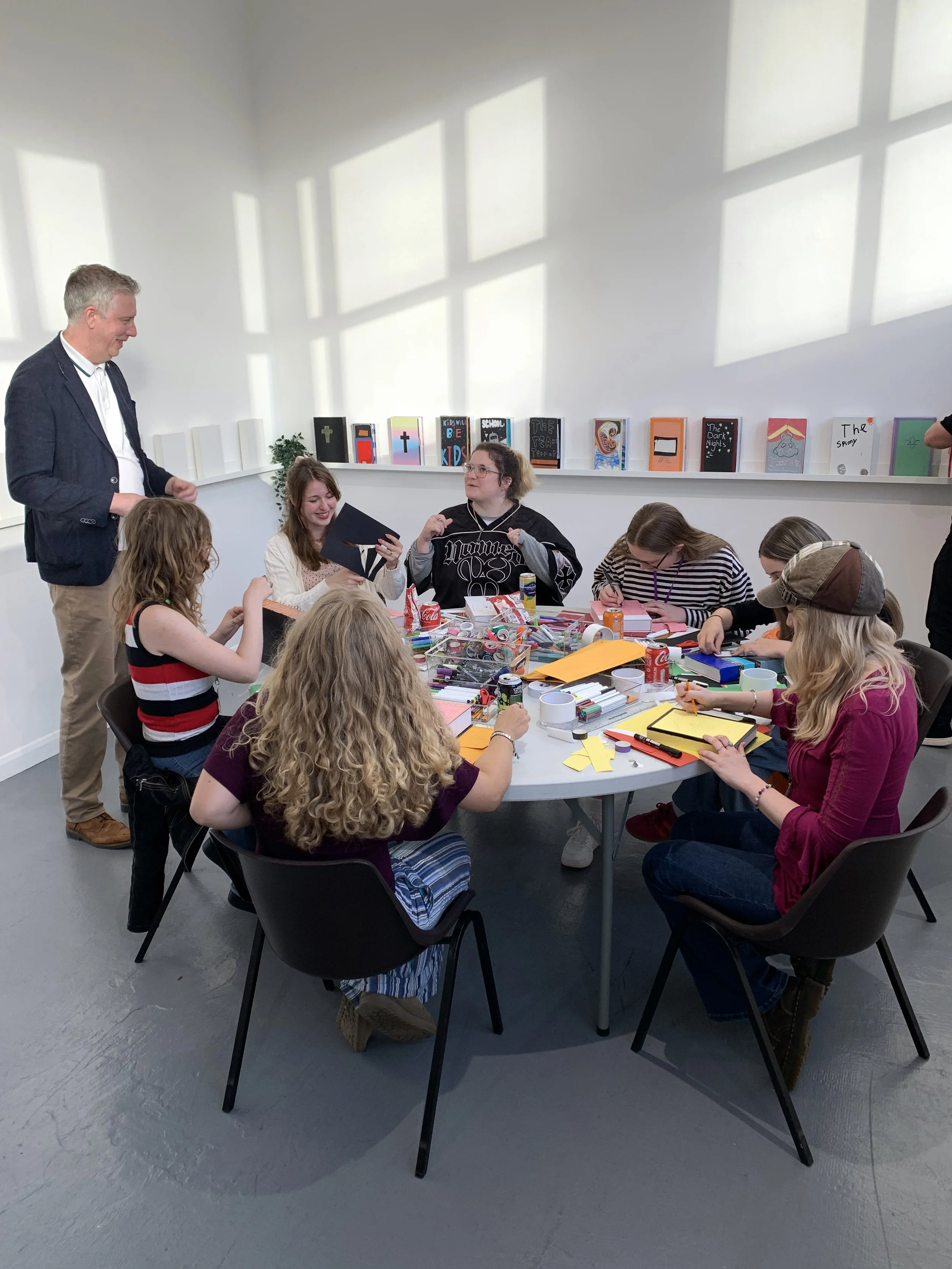
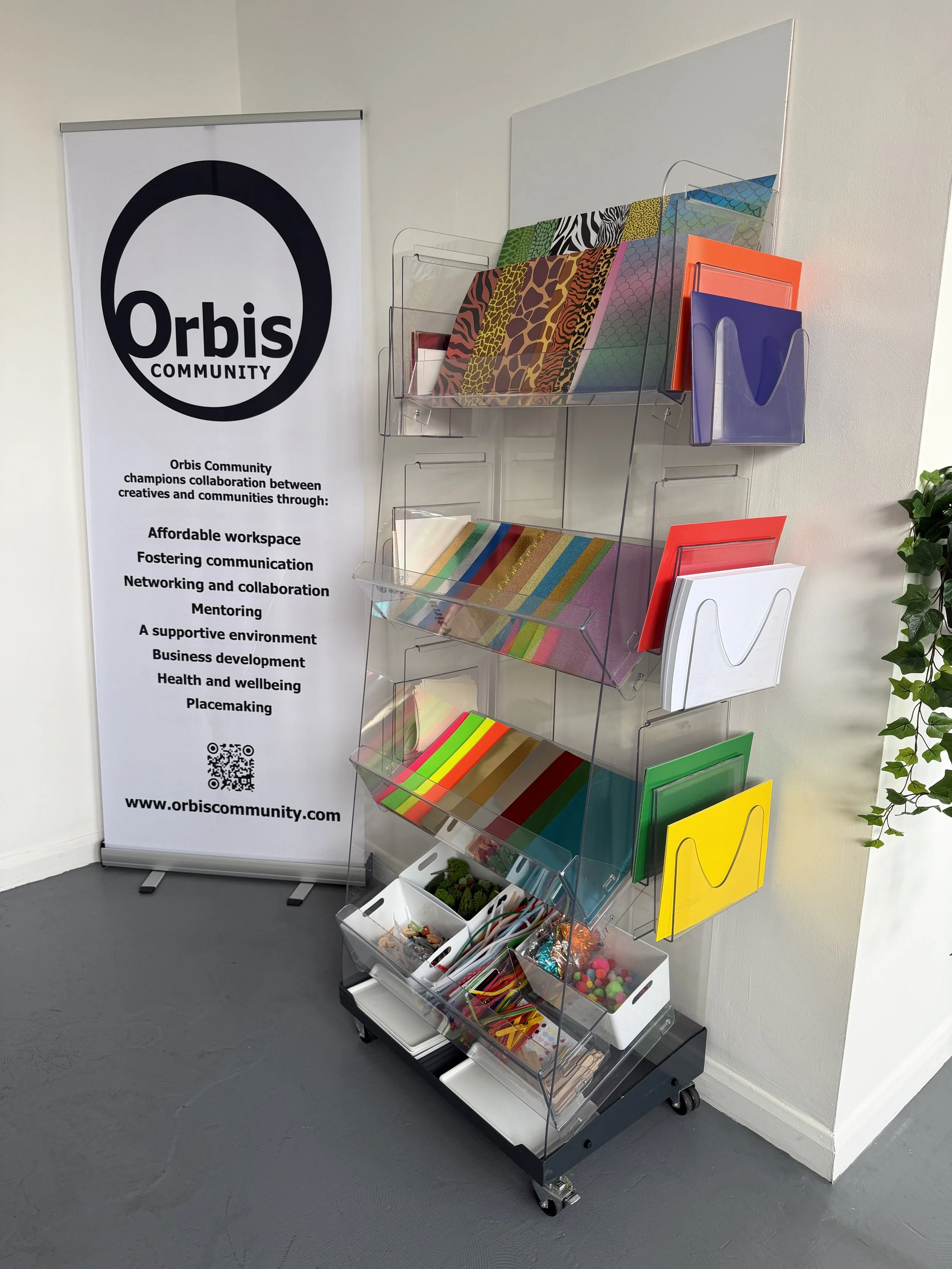
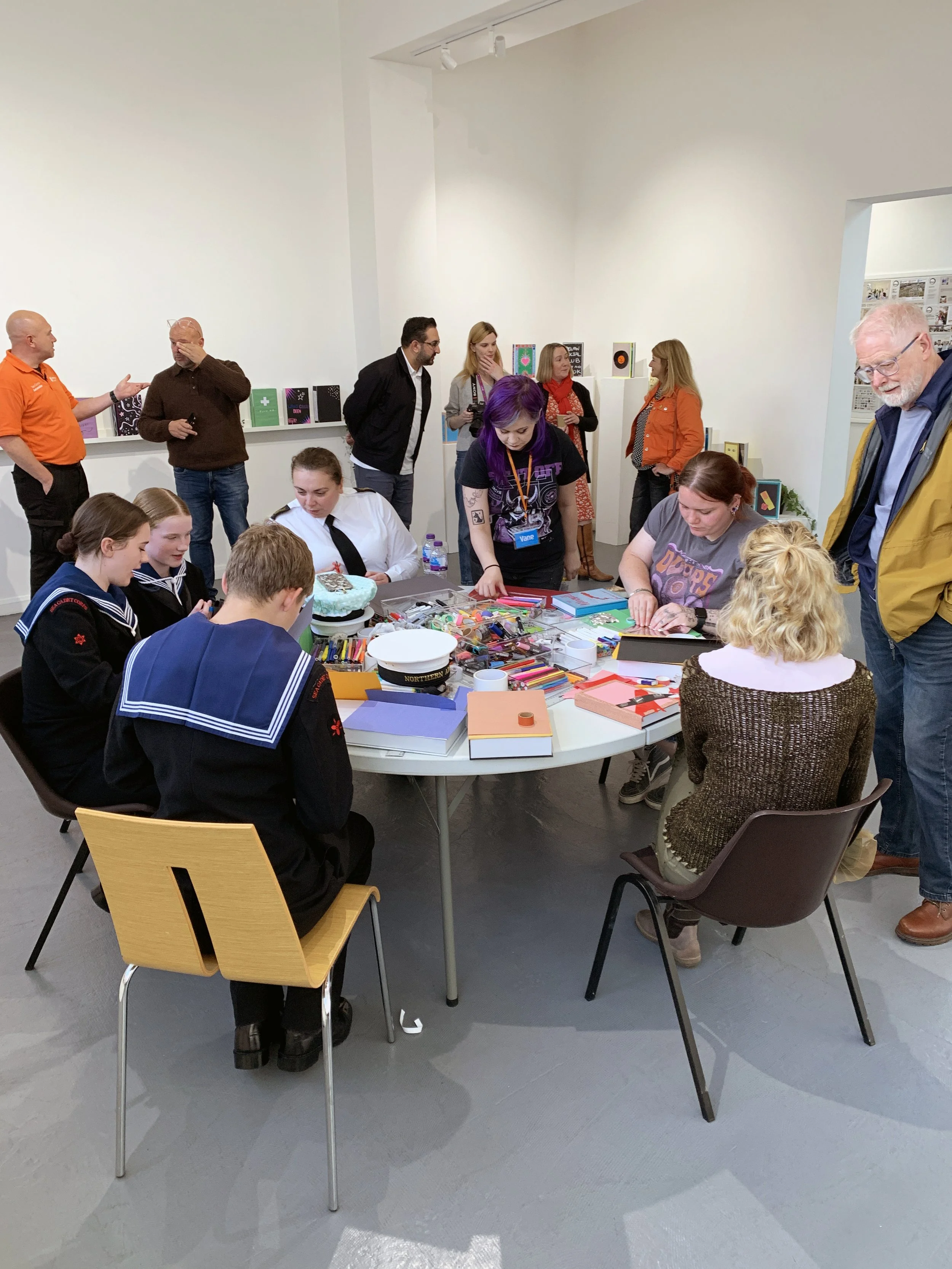
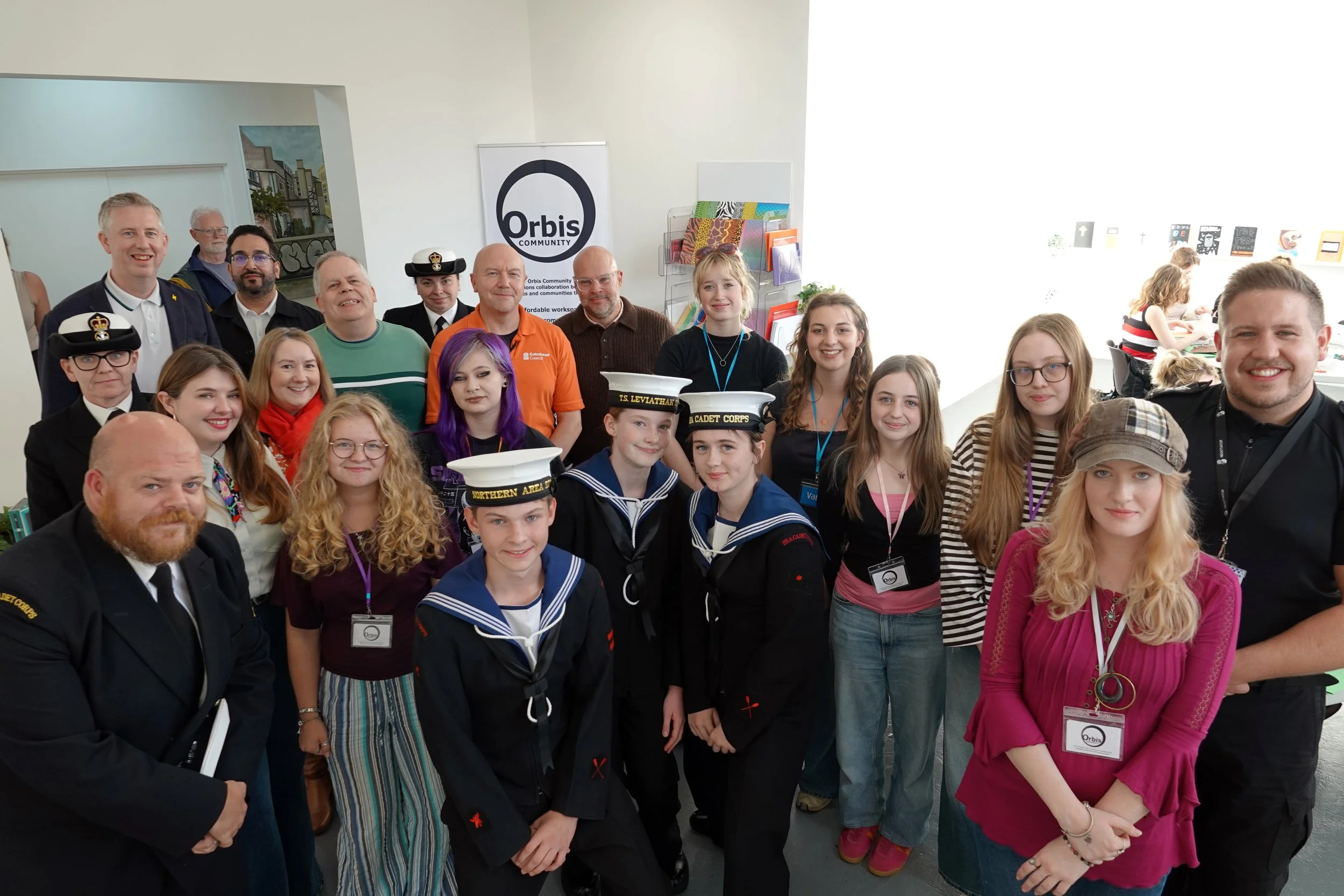
The project developed through a series of workshops, informal engagement sessions and conversations involving a broad cross-section of people from Gateshead and the wider North East. This included:
Let’s Be Blunt CIC, including founder Leanne Lucas, who took part in the project herself and created one of the hollow books.
Northumbria Police, including officers and staff involved in the project.
The Office of the Police and Crime Commissioner, including the Deputy Police and Crime Commissioner and OPCC staff.
Gateshead Council, including staff involved in knife-crime prevention, community work, communications and engagement.
NE Youth, including young people aged 12–16 from Barmoor Youth Club.
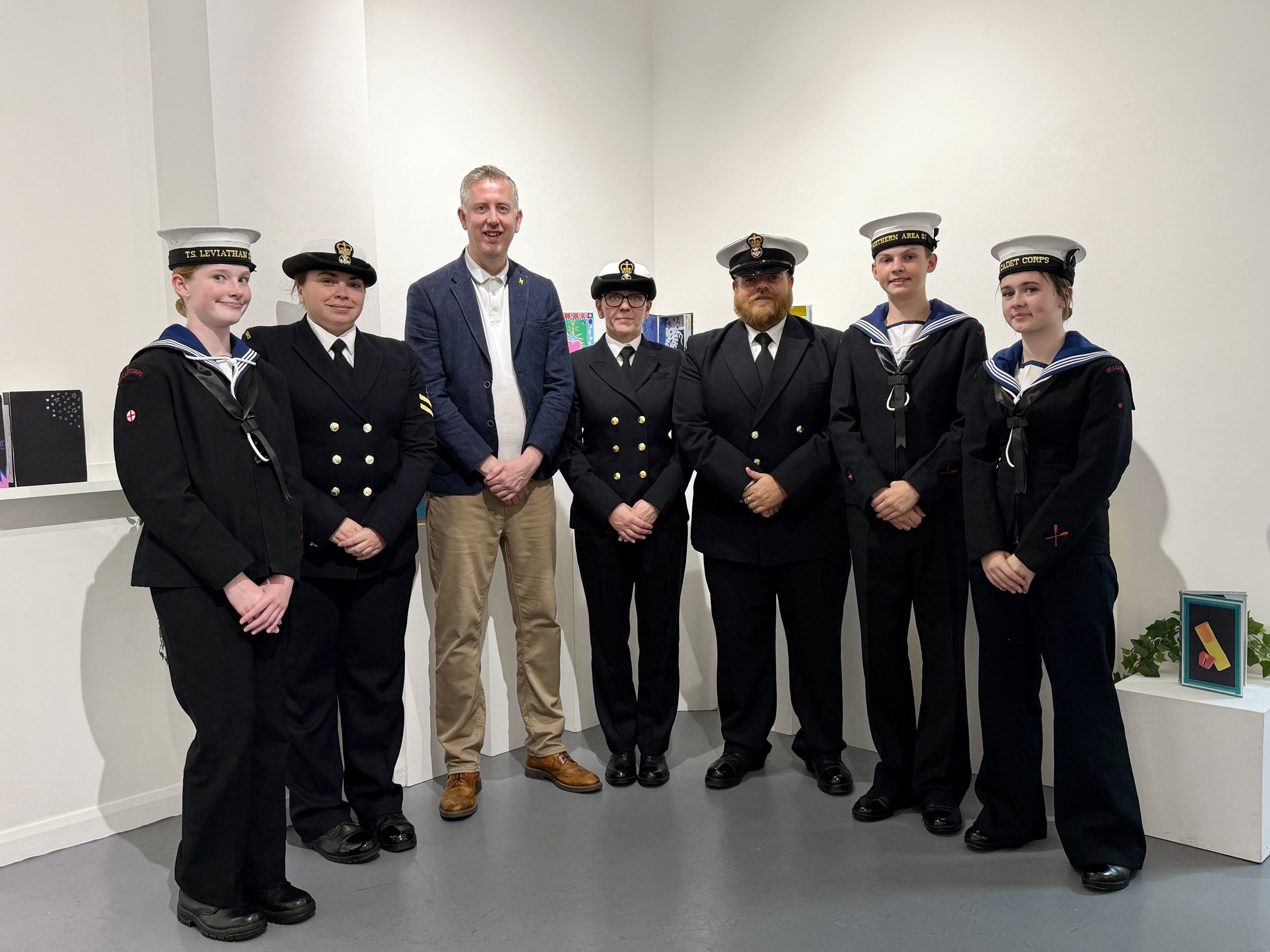
Gateshead Sea Cadets, with young people participating in the creative process.
Gateshead College, with students participating through several workshops involving different departments.
Northumbria University, including students and recent graduates.
Newcastle University, with students participating in the project.
Local schools, including young people undertaking work-experience placements with Vane.
Orbis Community, including artists, creatives, students and people based within the studios.
Northeast Creative Network, including artists and creatives from across the network.
Vane, through the development, presentation and continuing evolution of the project.
Gateshead town centre businesses and community representatives, with Orbis Community's ongoing involvement in Town Watch creating regular contact with shops, managers, organisations and people working within the town centre.
Members of the public, who could participate, contribute, listen, talk or simply spend time around the project.
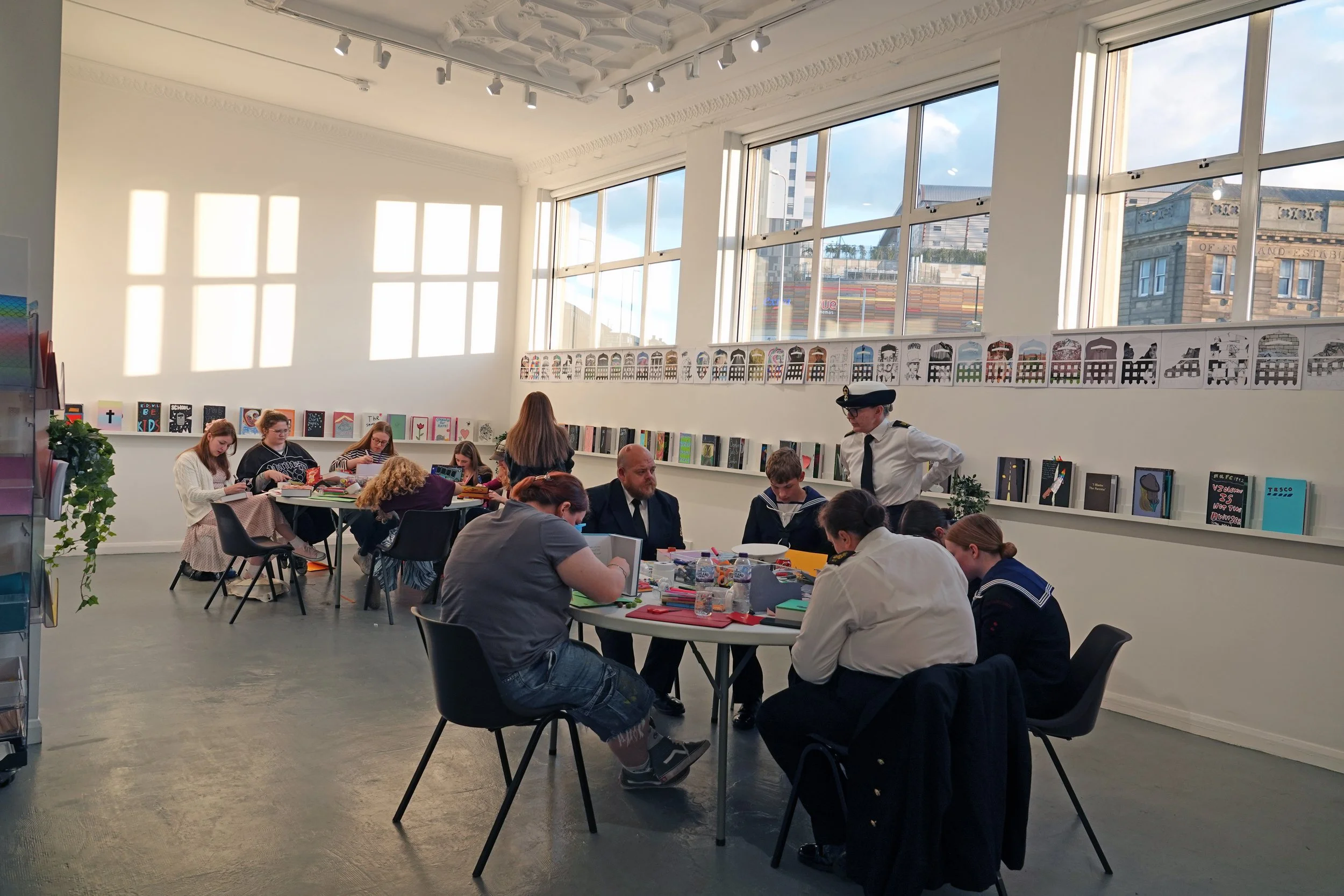
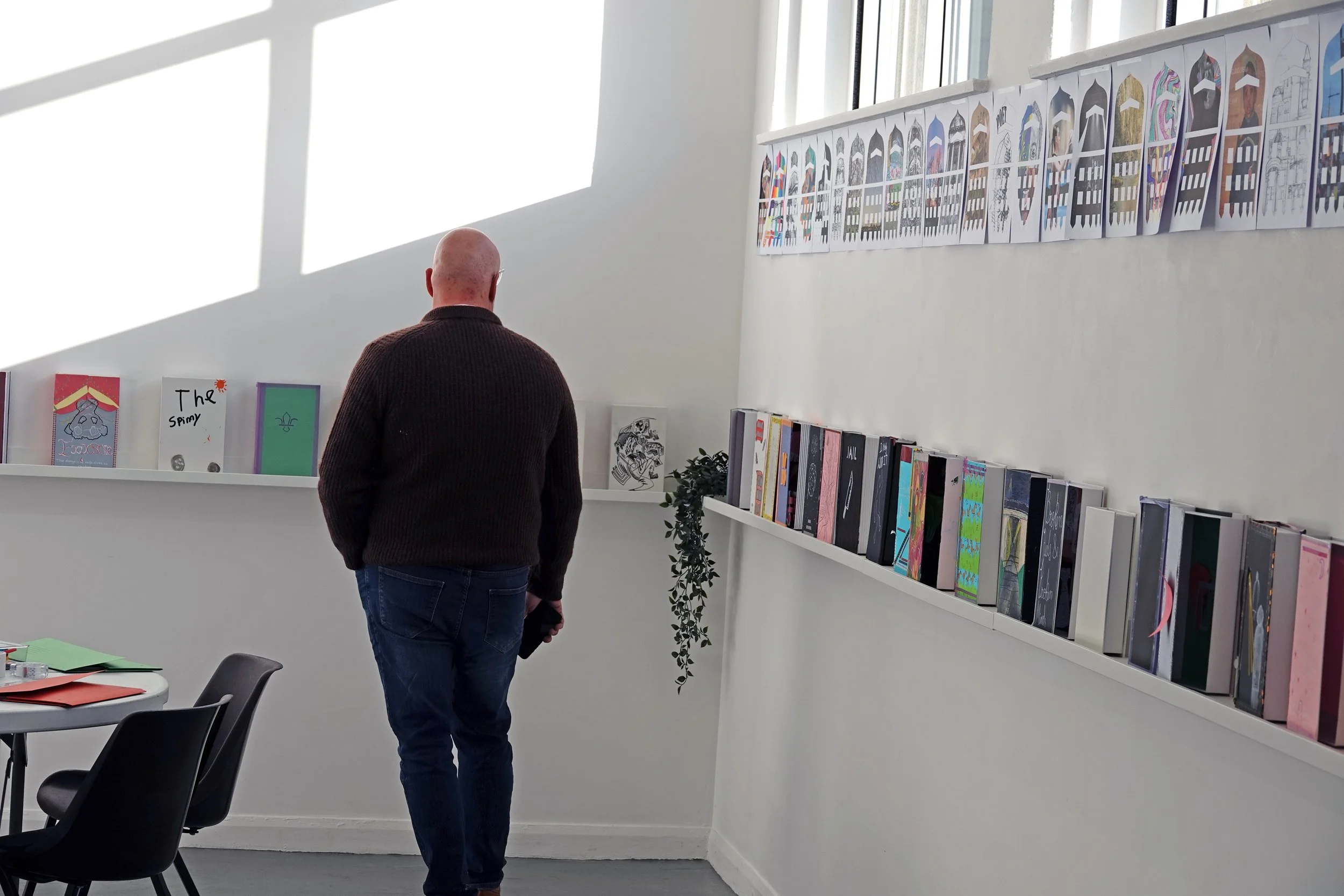
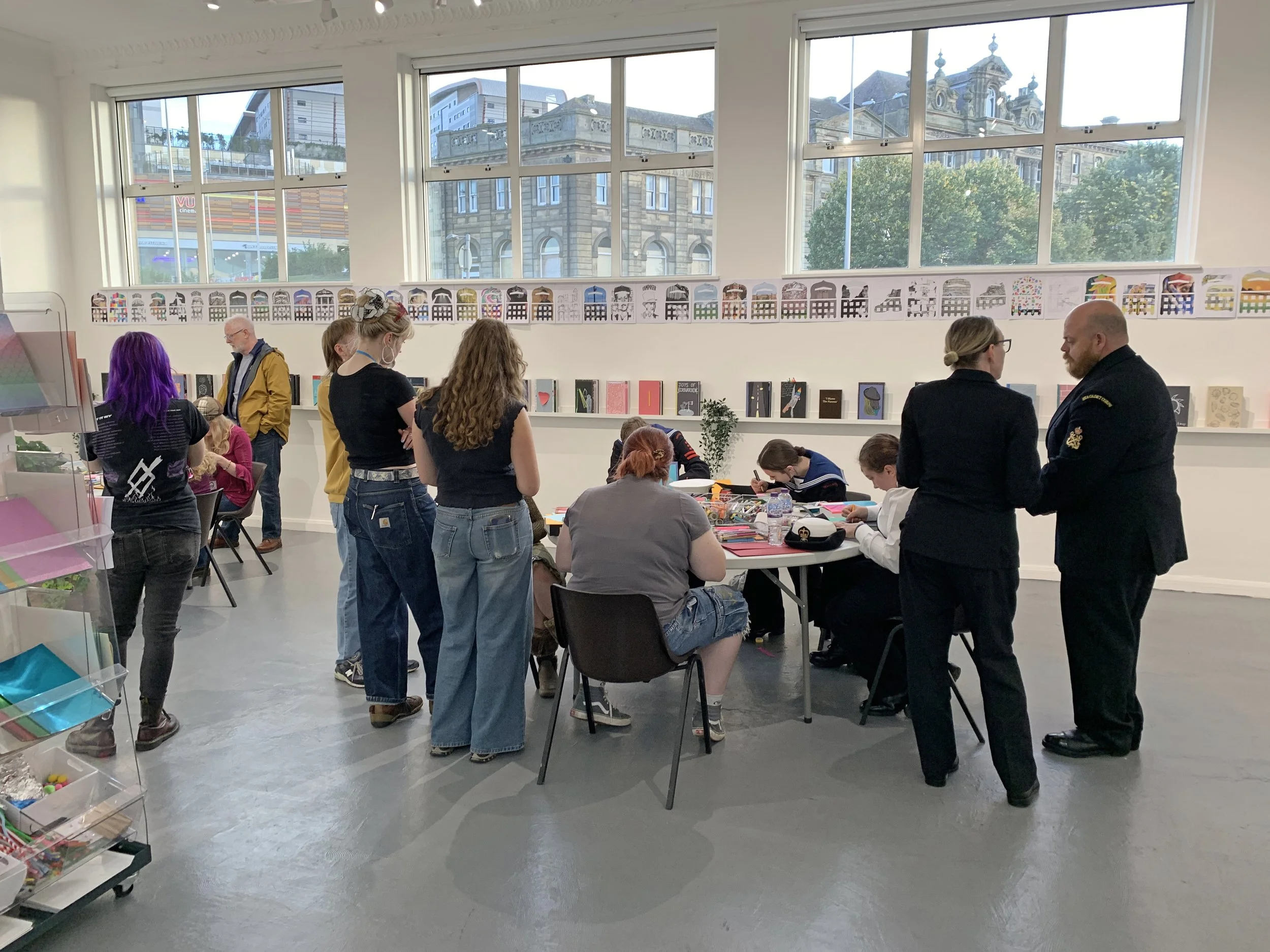
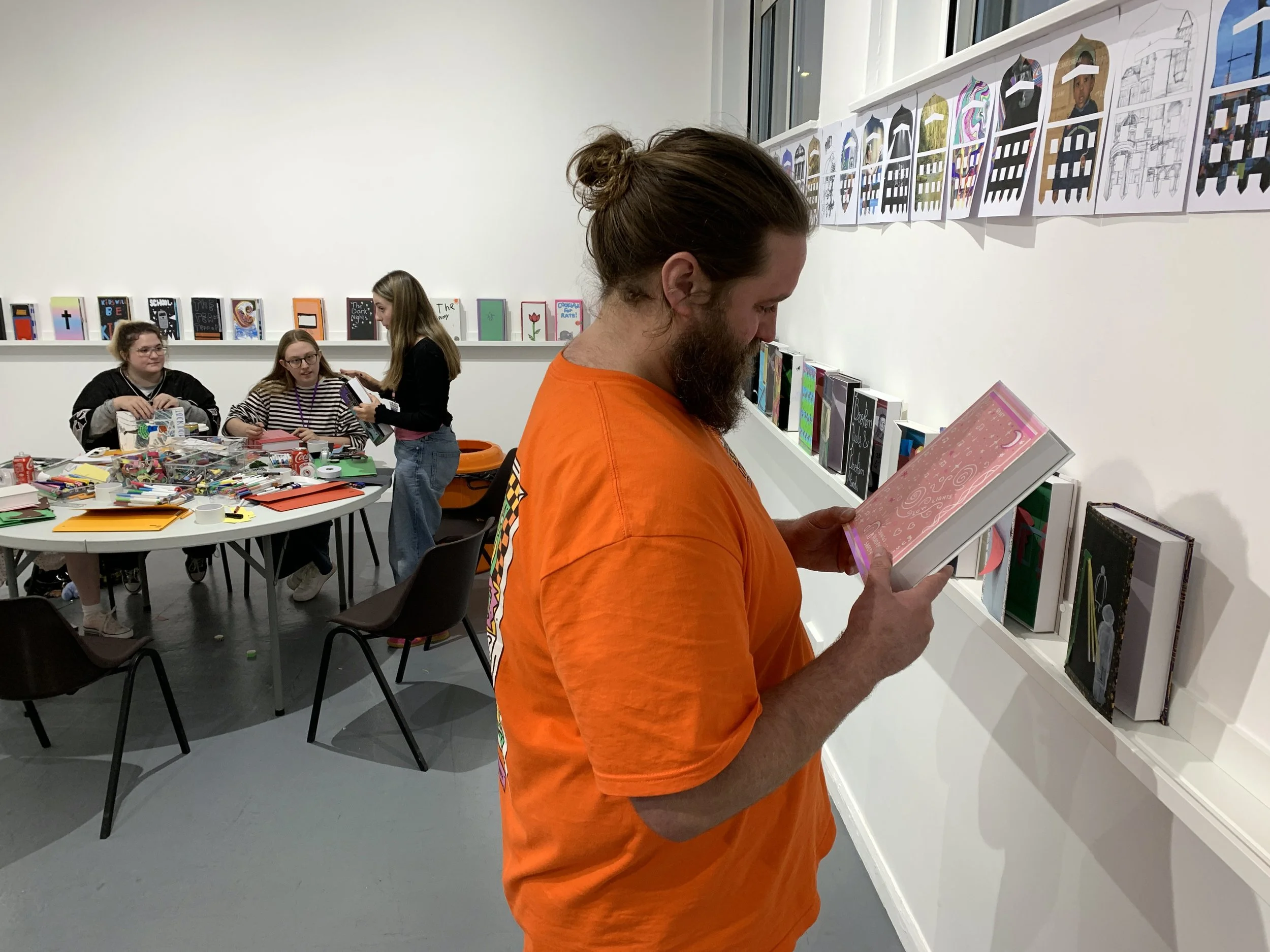
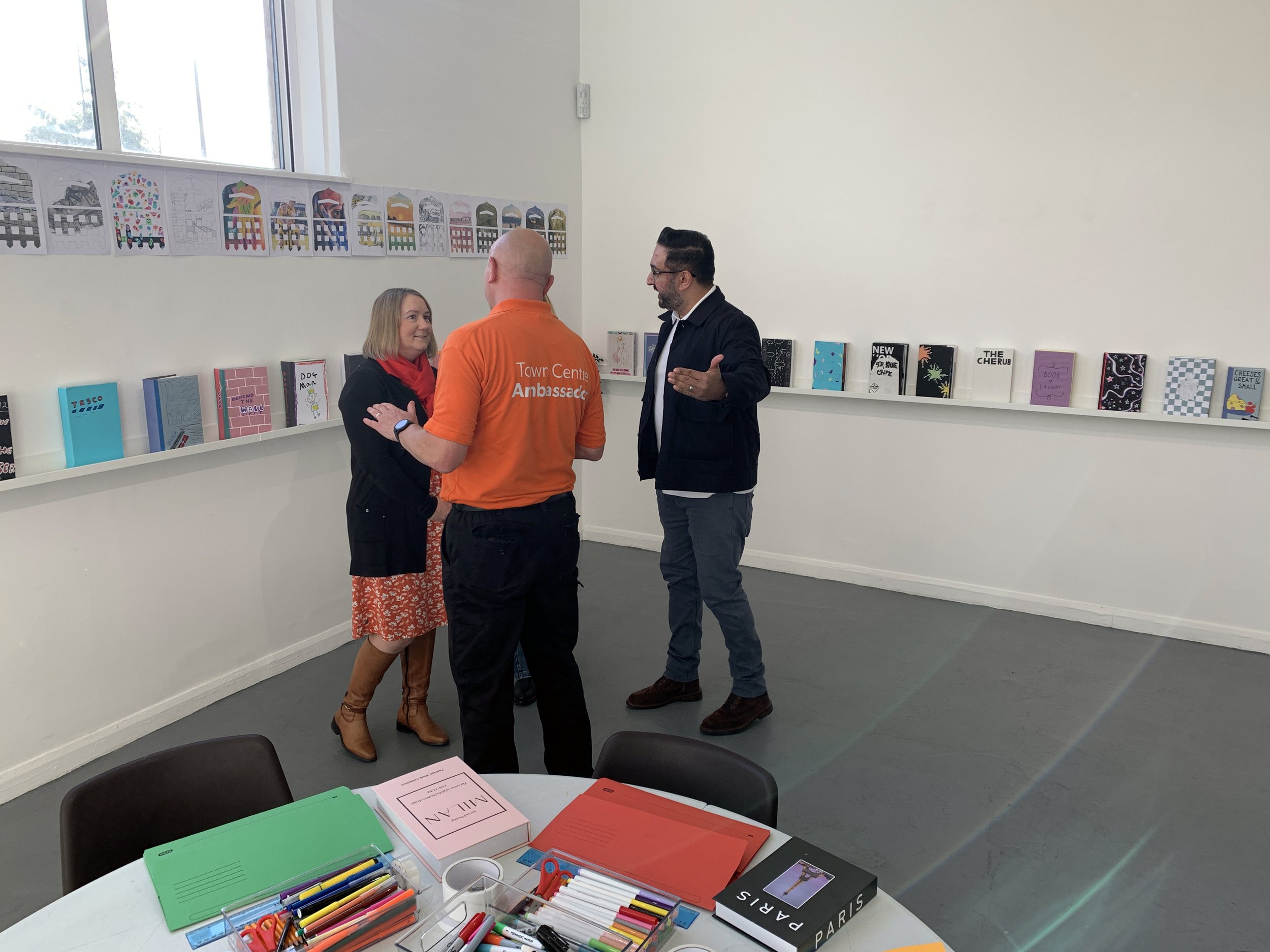
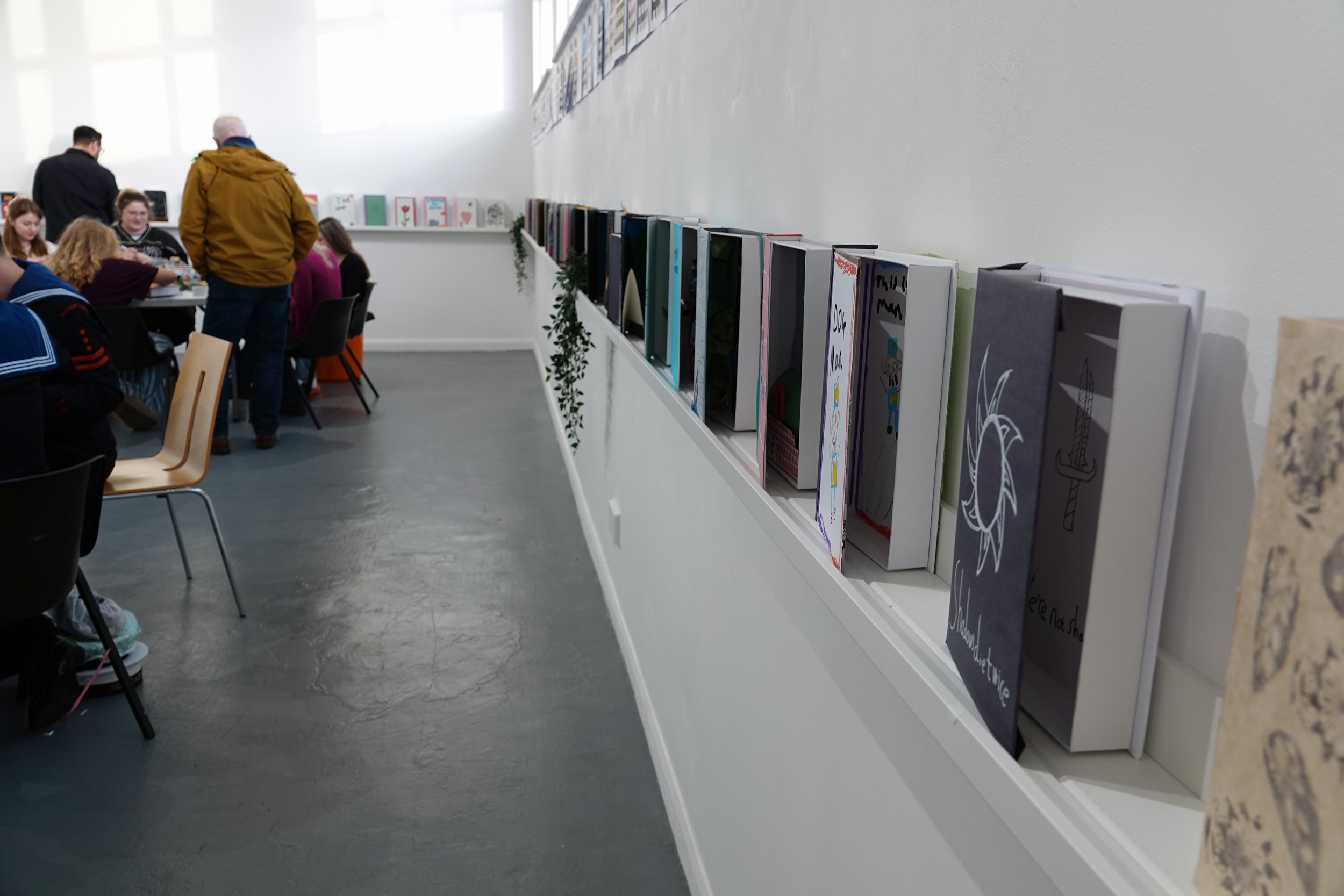
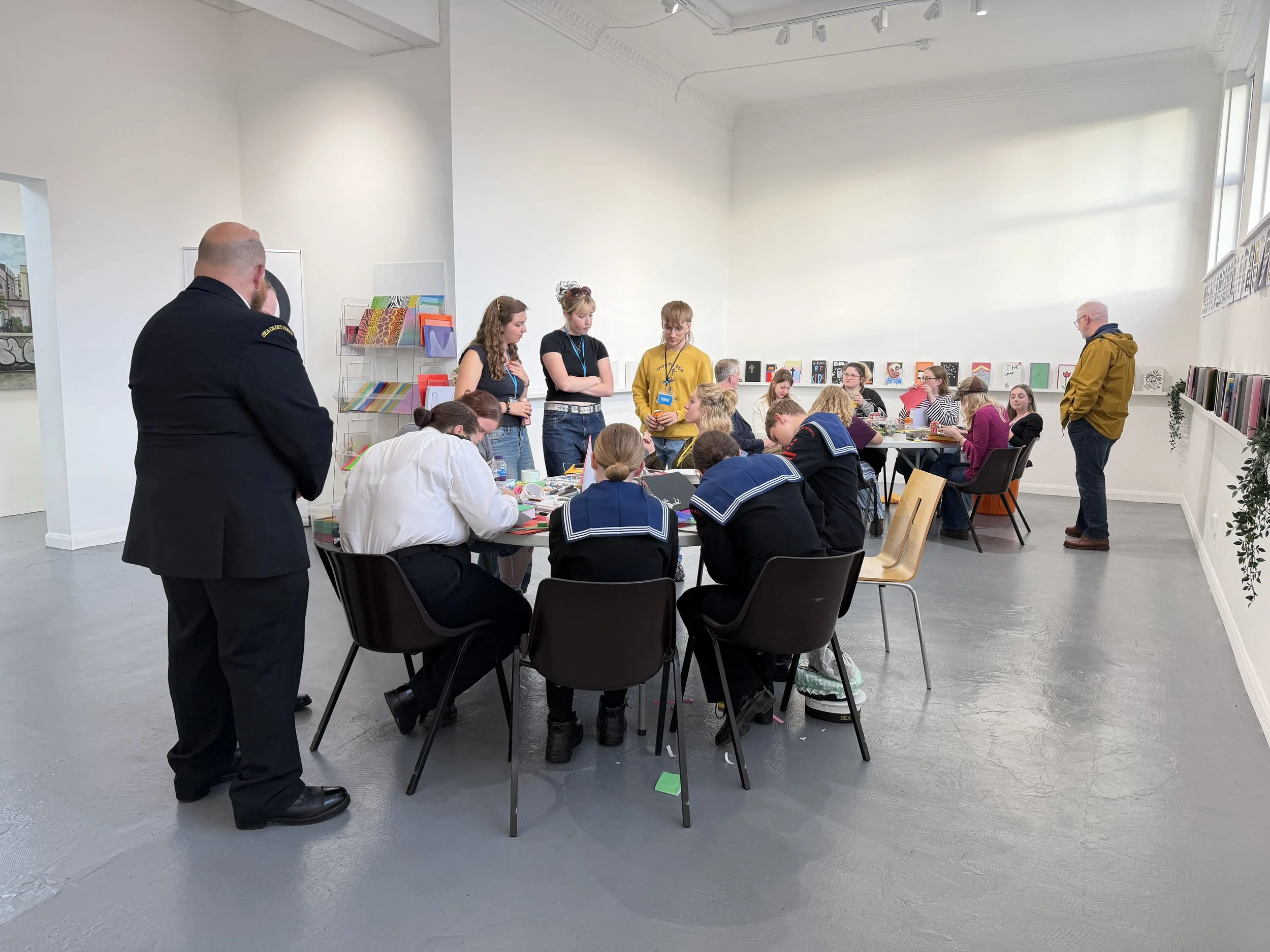
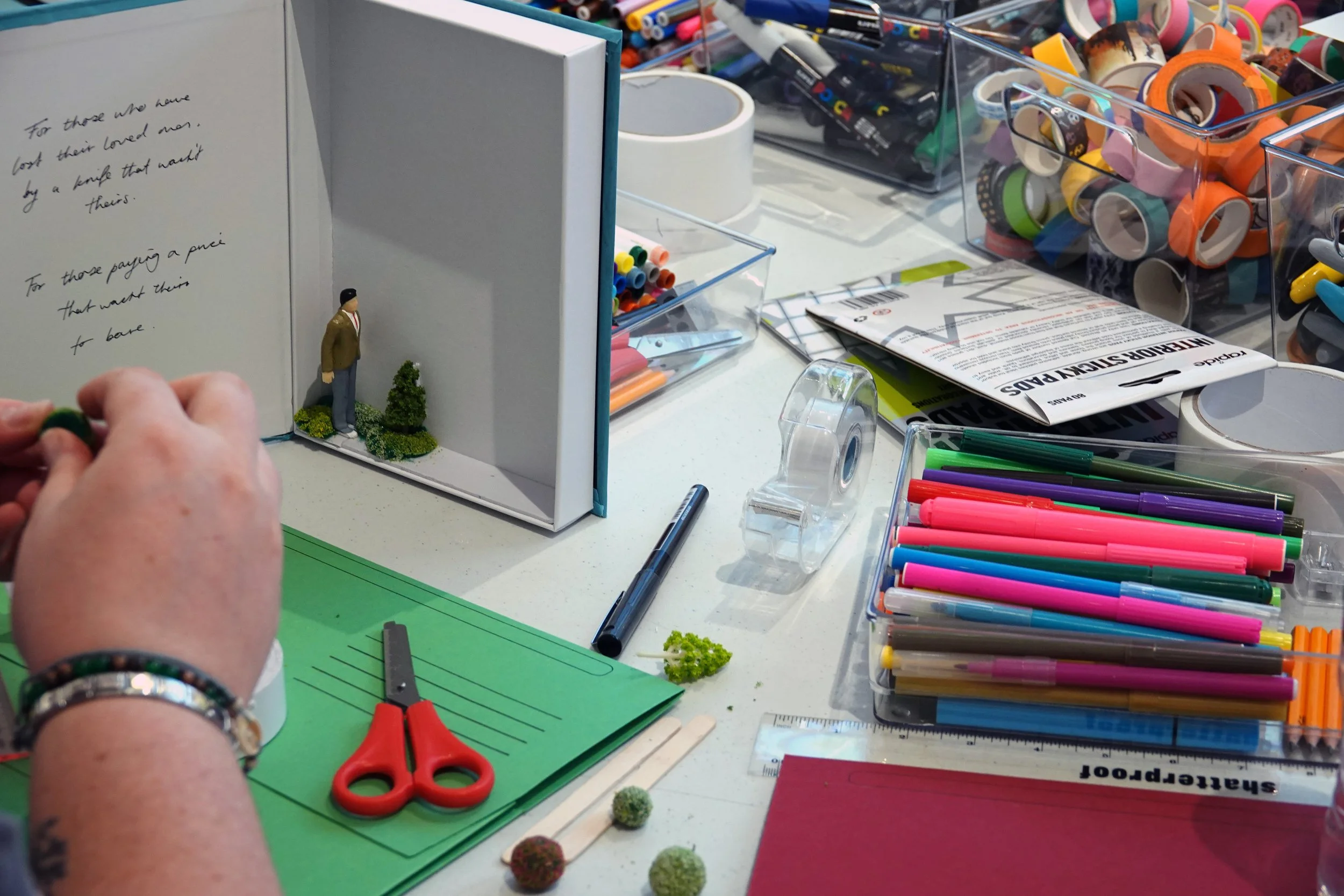
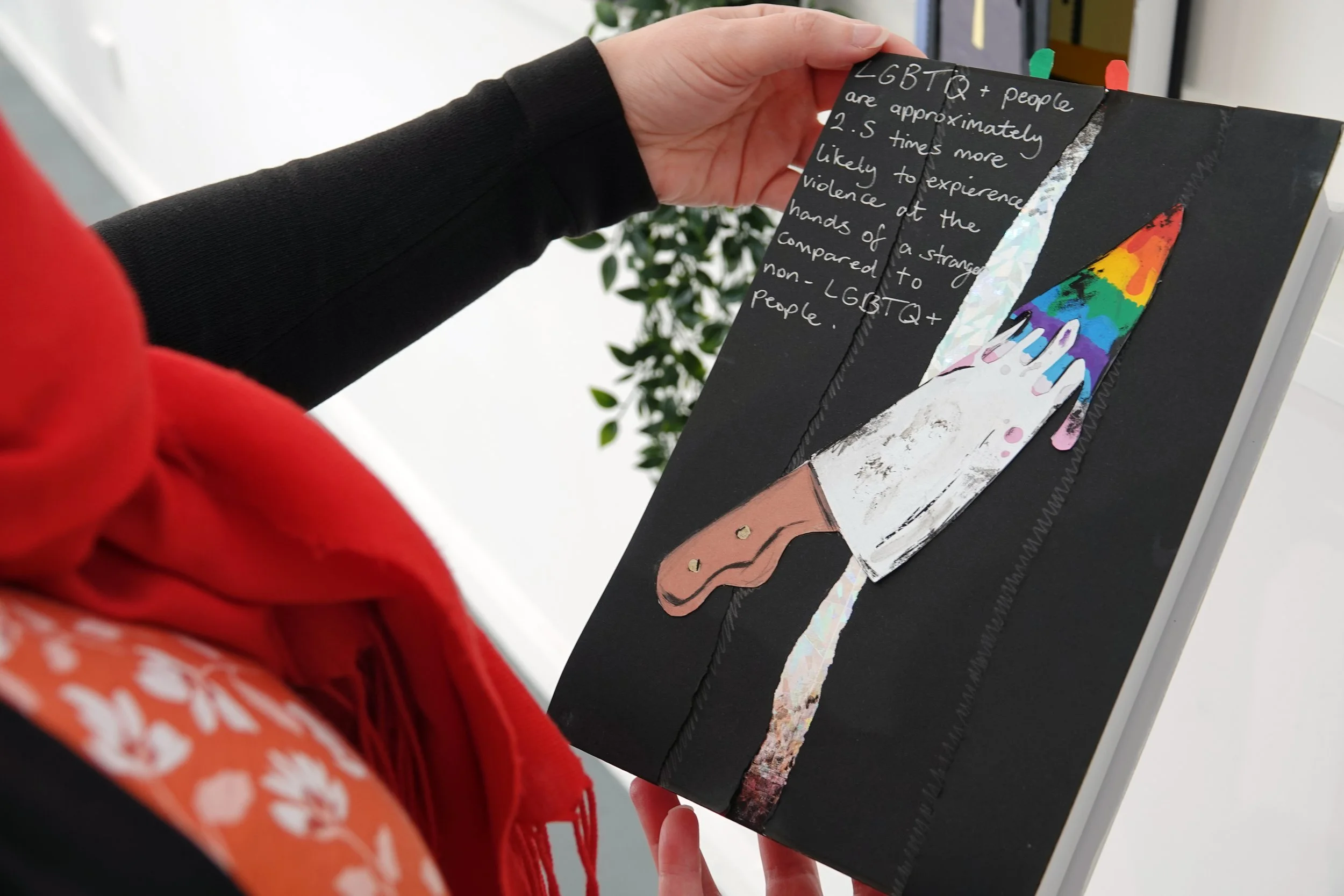
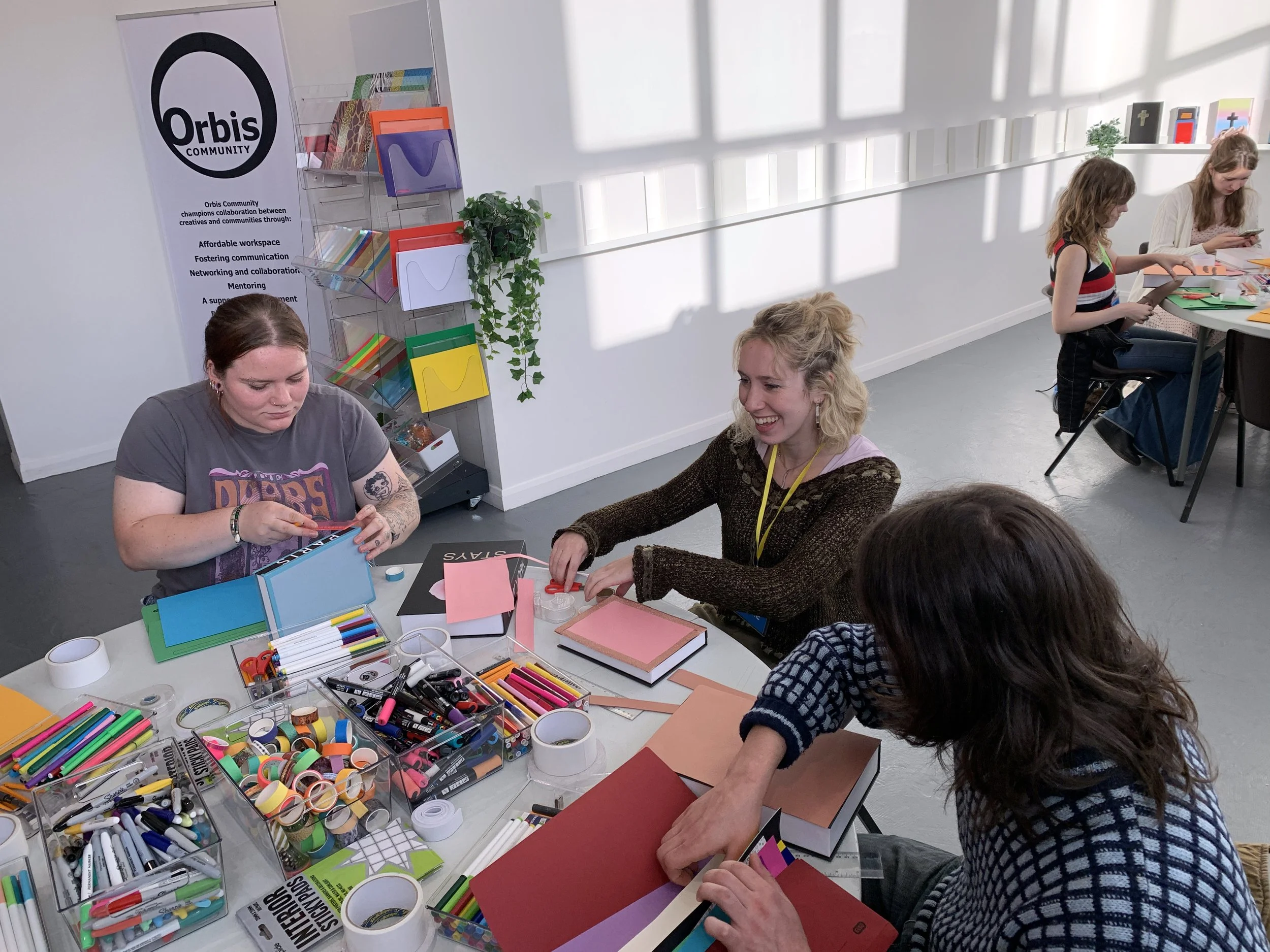
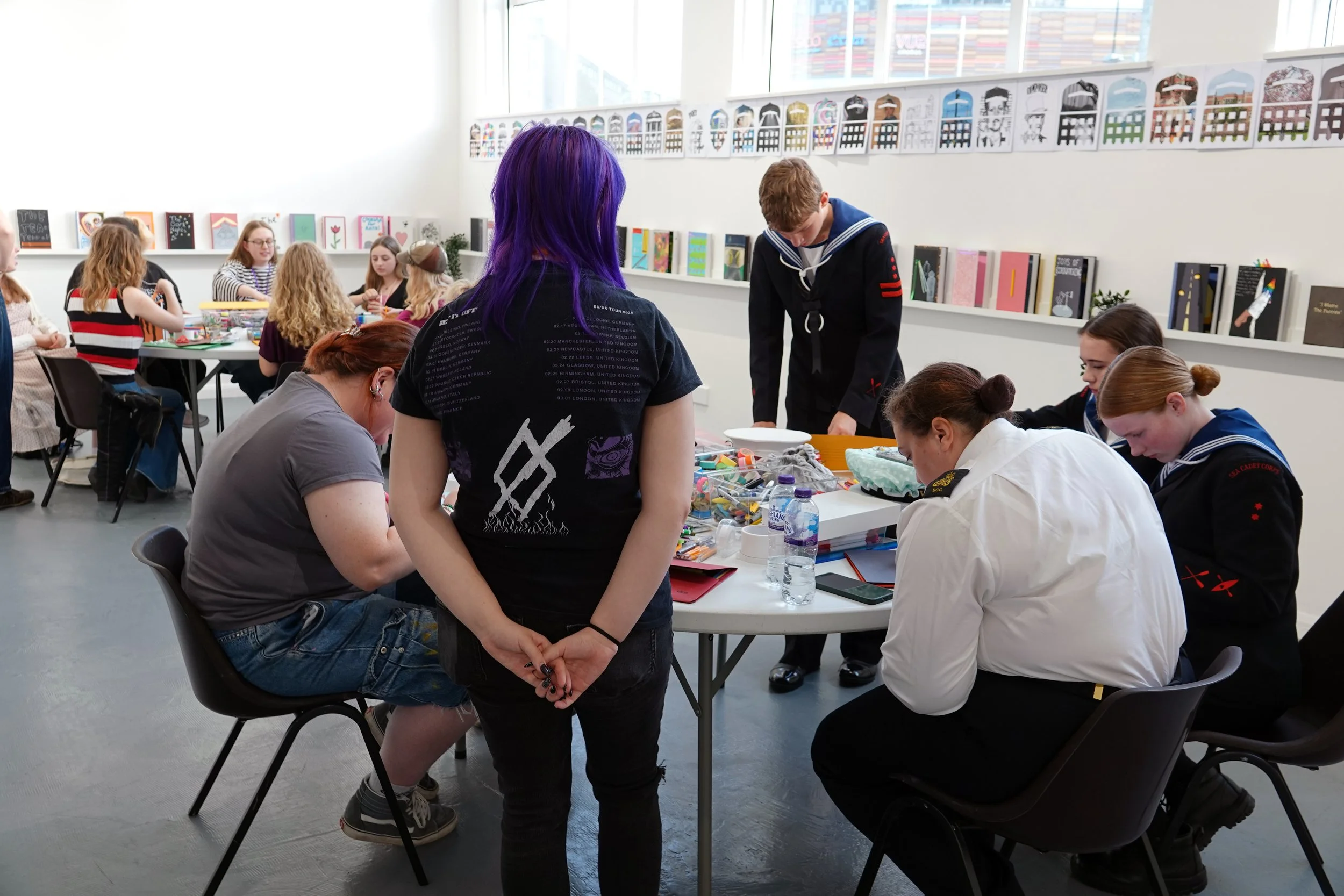
The project also recognised that experiences around violence, safety, behaviour, wellbeing, identity and trauma can overlap in complicated ways. At no point were people prevented from sharing something because it did not fit neatly within a predetermined category. Equally, nobody was expected to disclose personal experiences. Someone could complete an entire book, make several, contribute a small element, leave a book unfinished or completely blank, help somebody else, join a conversation, listen, or simply be present. The original project deliberately recognised that people's responses might be minimal, hidden, quiet or unfinished because everybody communicates differently and in their own time.
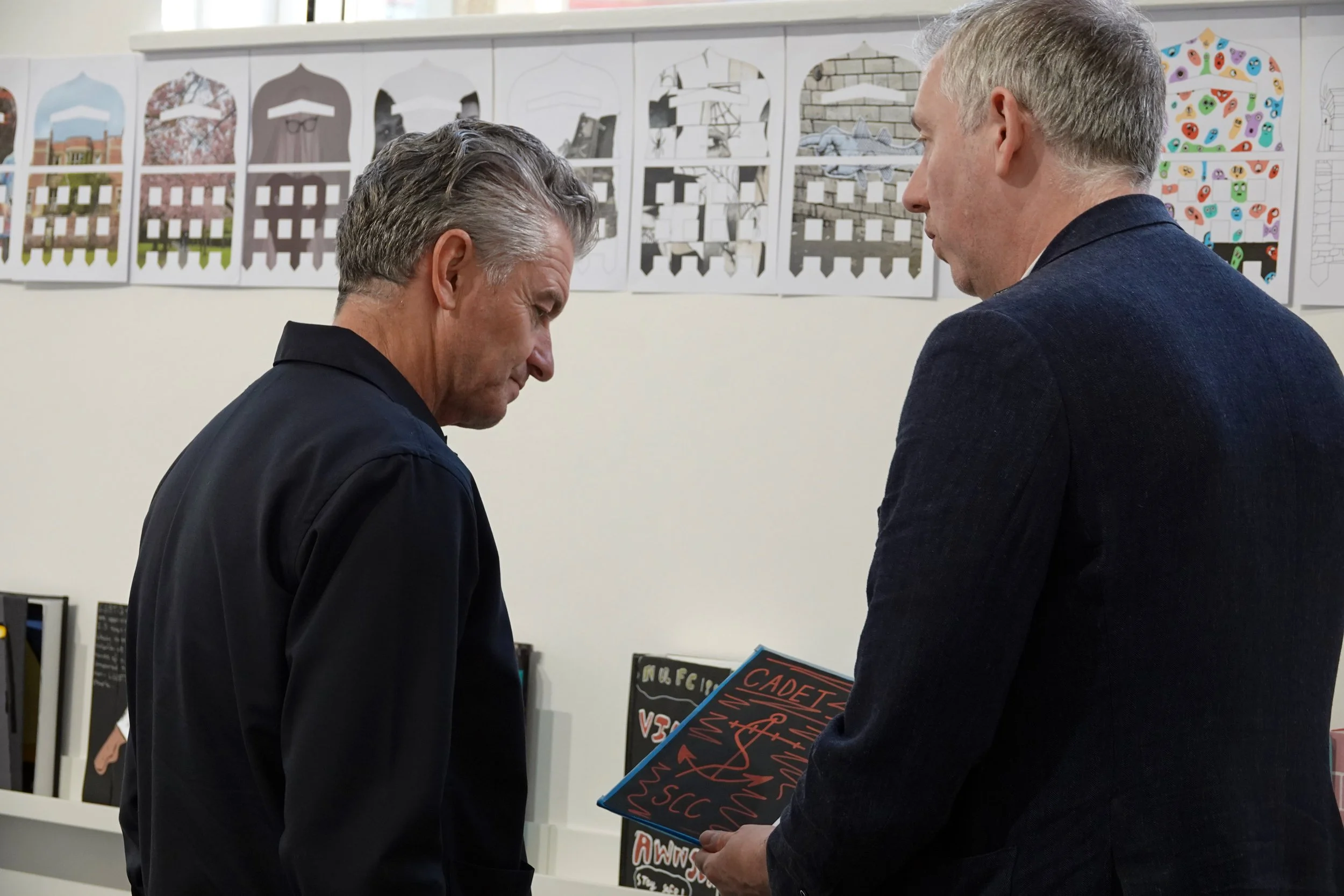

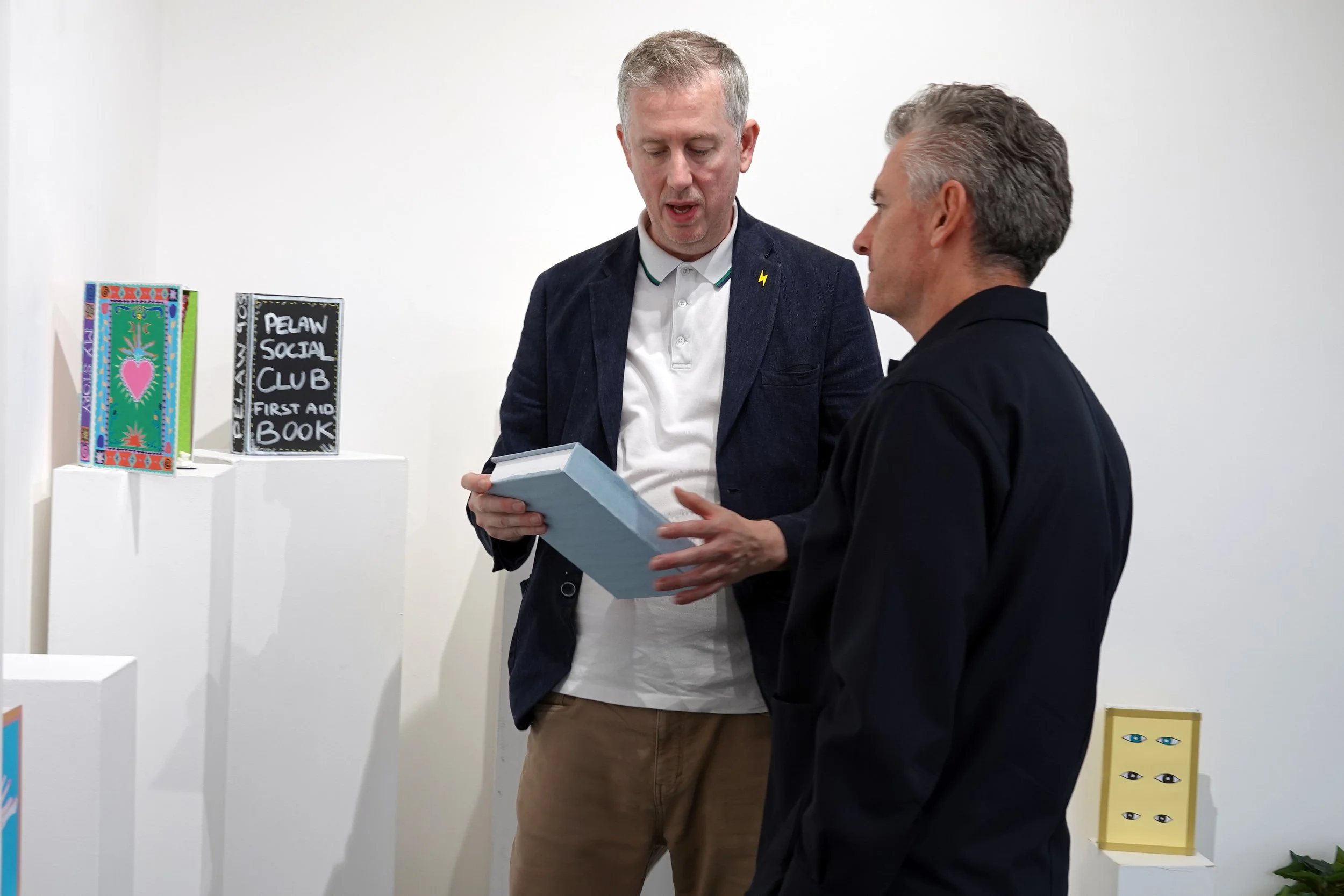

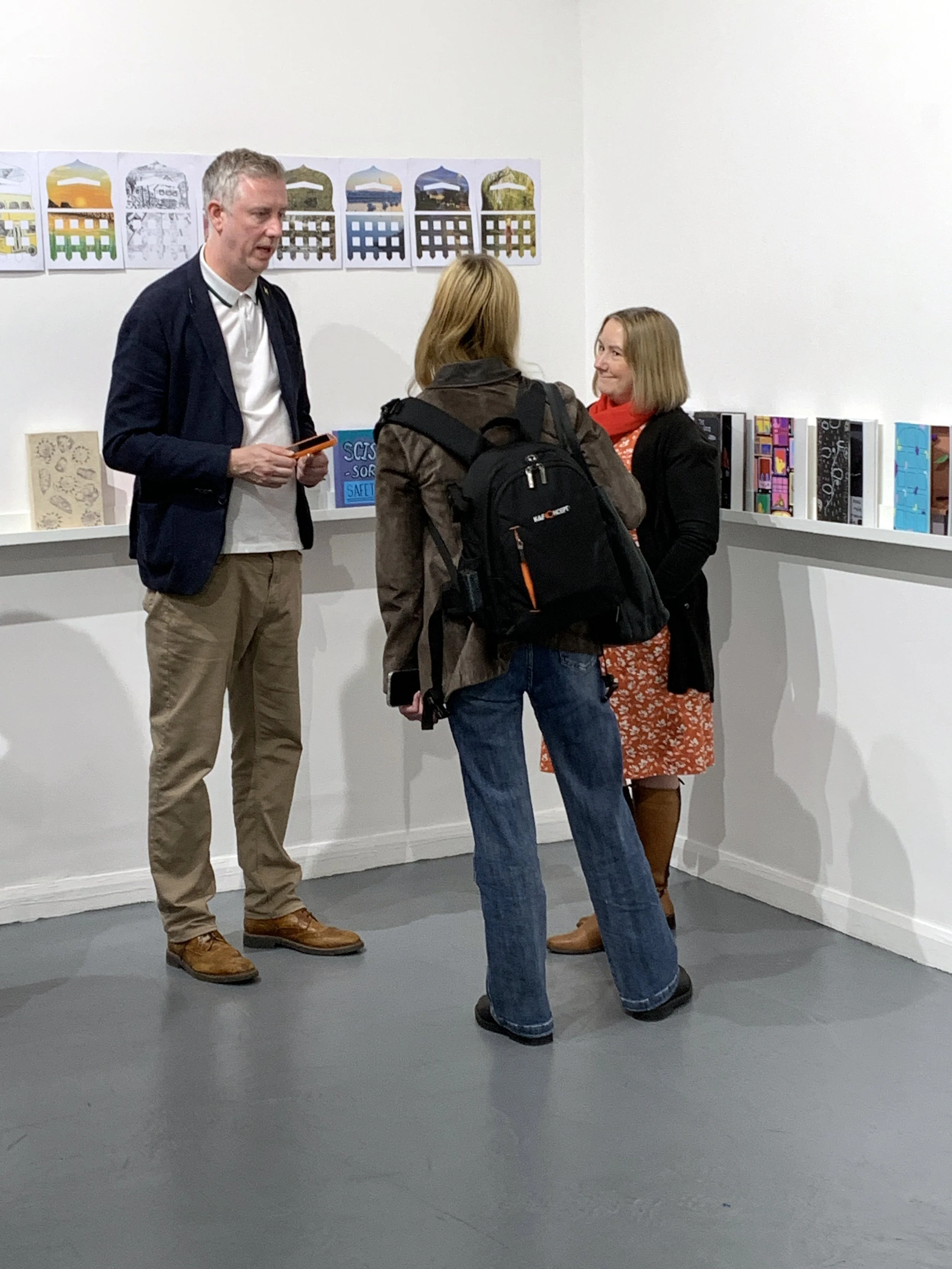
Professor Spencer Chainey, Professor of Security and Crime Science at UCL, London, visited ‘Acts of Listening’ while in Gateshead to deliver a hotspot policing session, hosted by Orbis Community, to Northumbria Police officers as part of Project Guardian, the force’s work addressing knife-enabled crime. His work with police, community safety partners and the Police and Crime Commissioner focuses on understanding patterns of crime and finding evidence-led ways to make places safer. His visit to the exhibition brought these conversations into dialogue with the installation.
Share this page