
Indivisible
16-24 January 2026
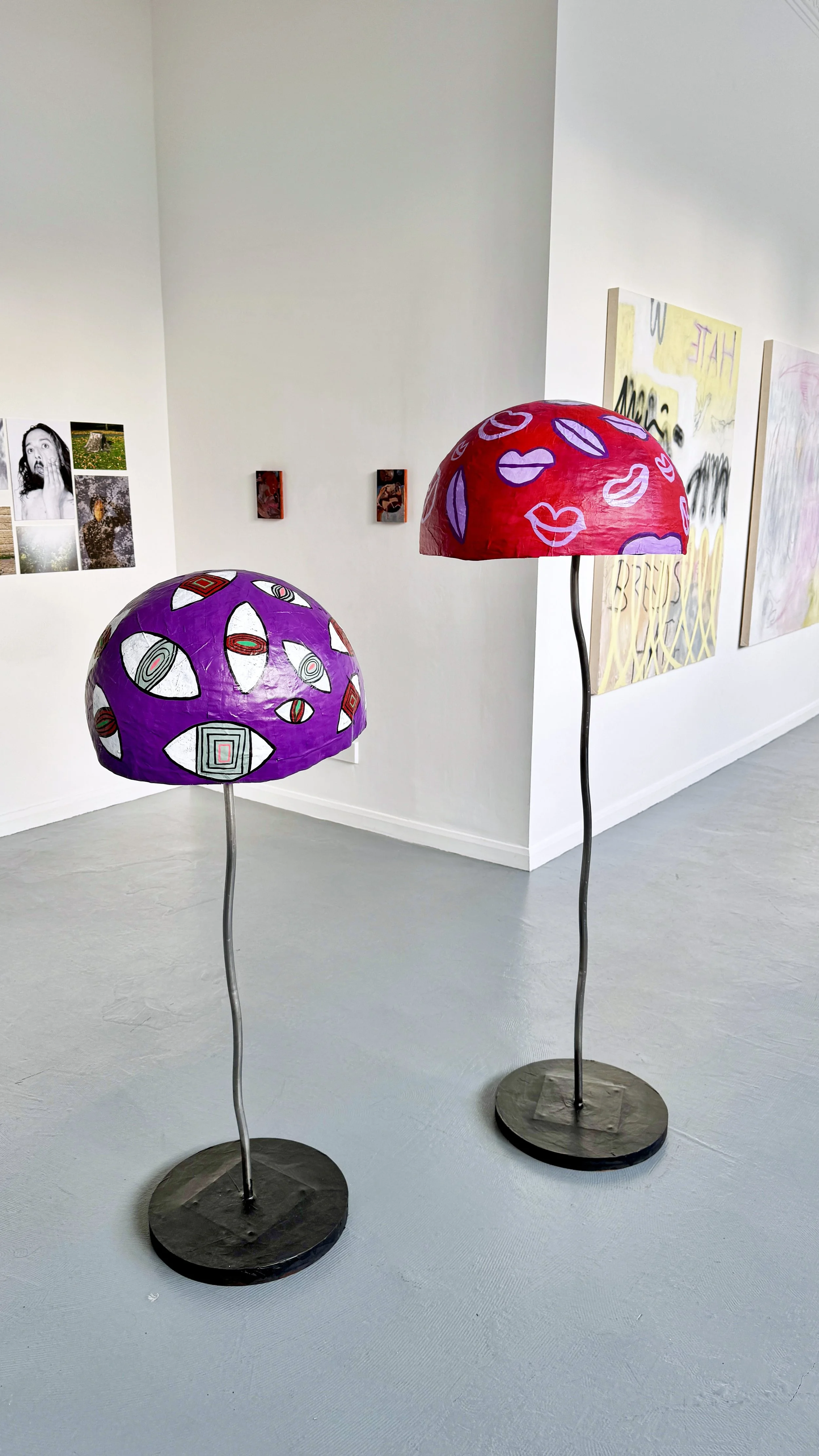
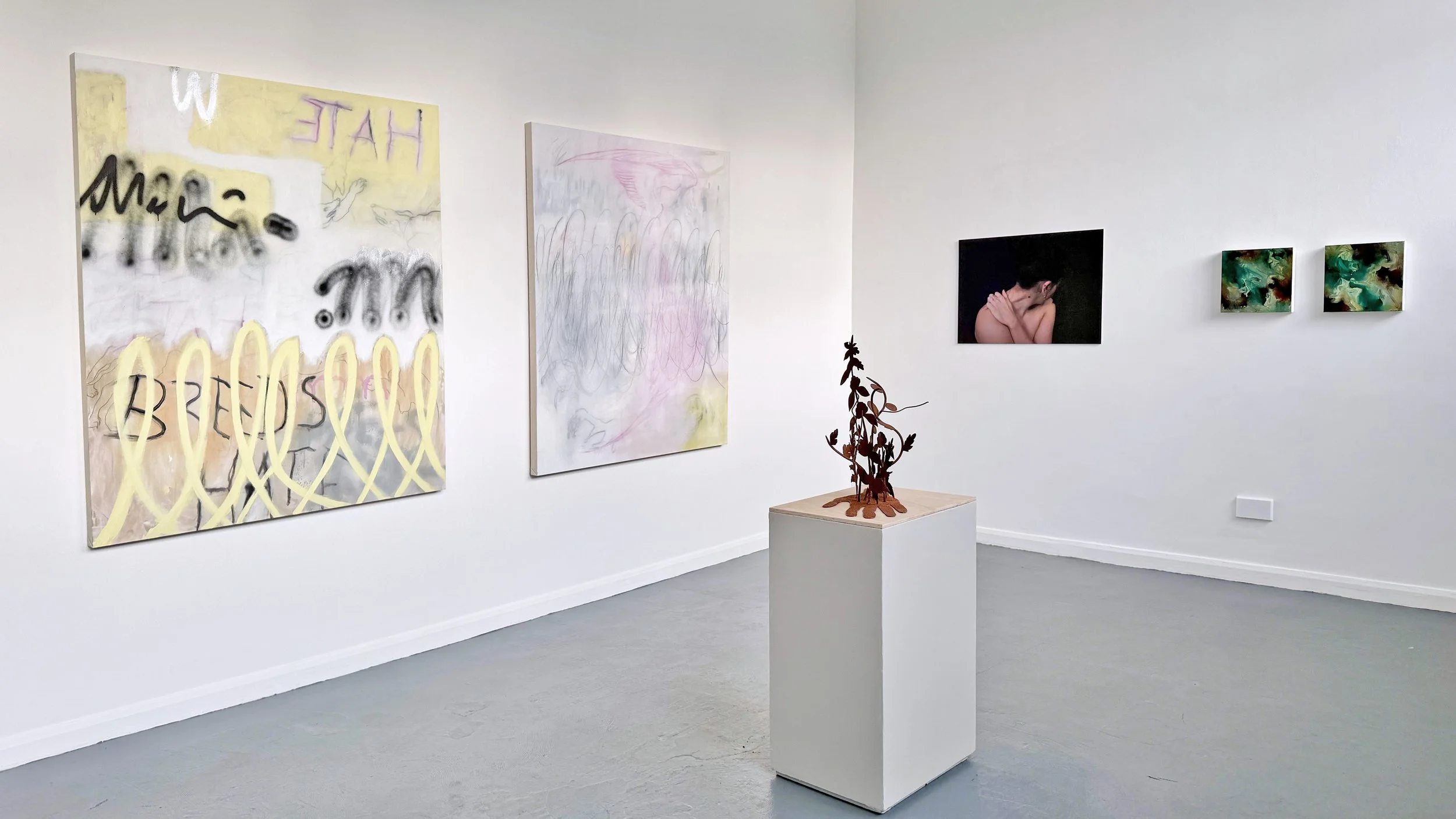
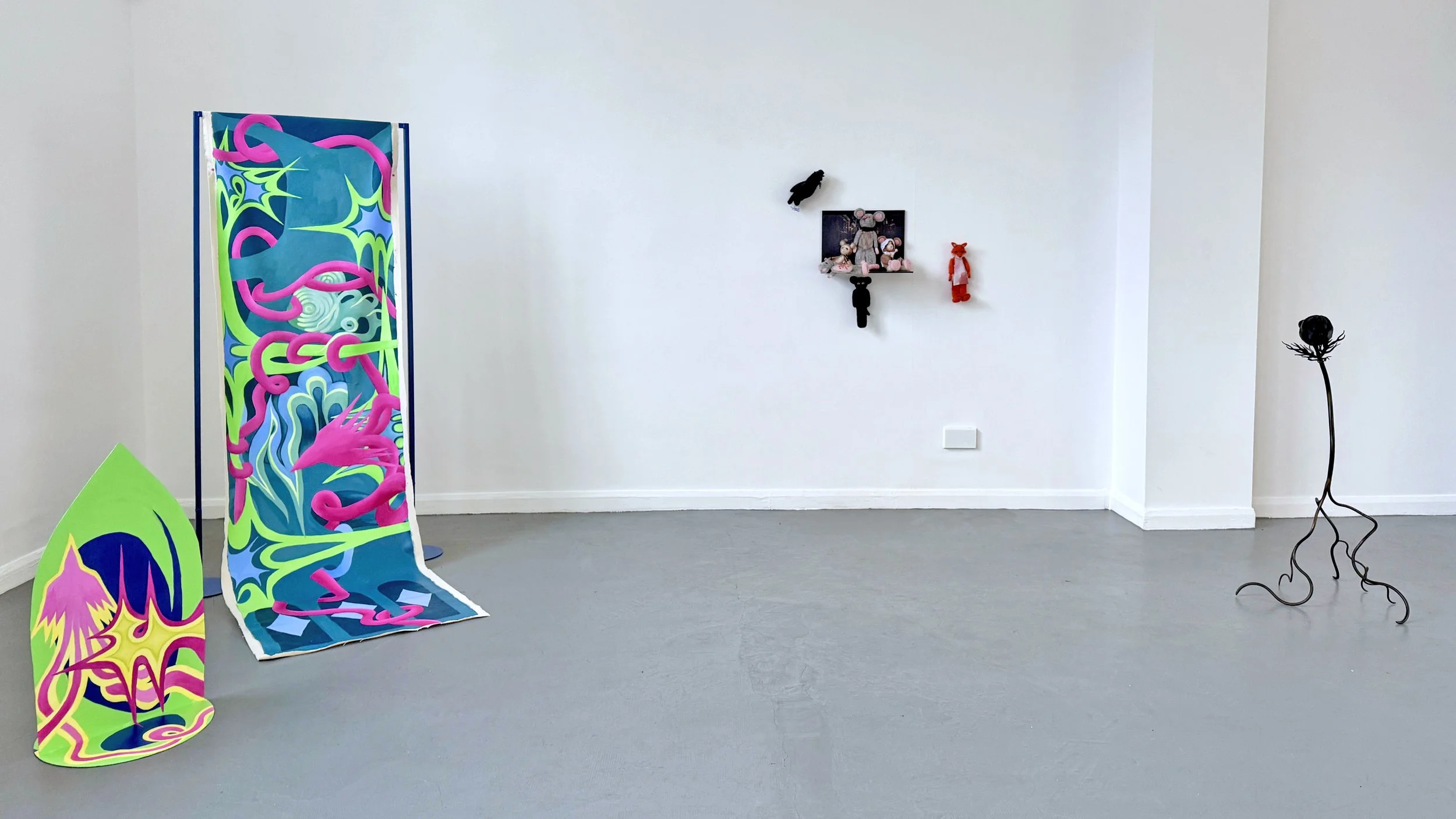
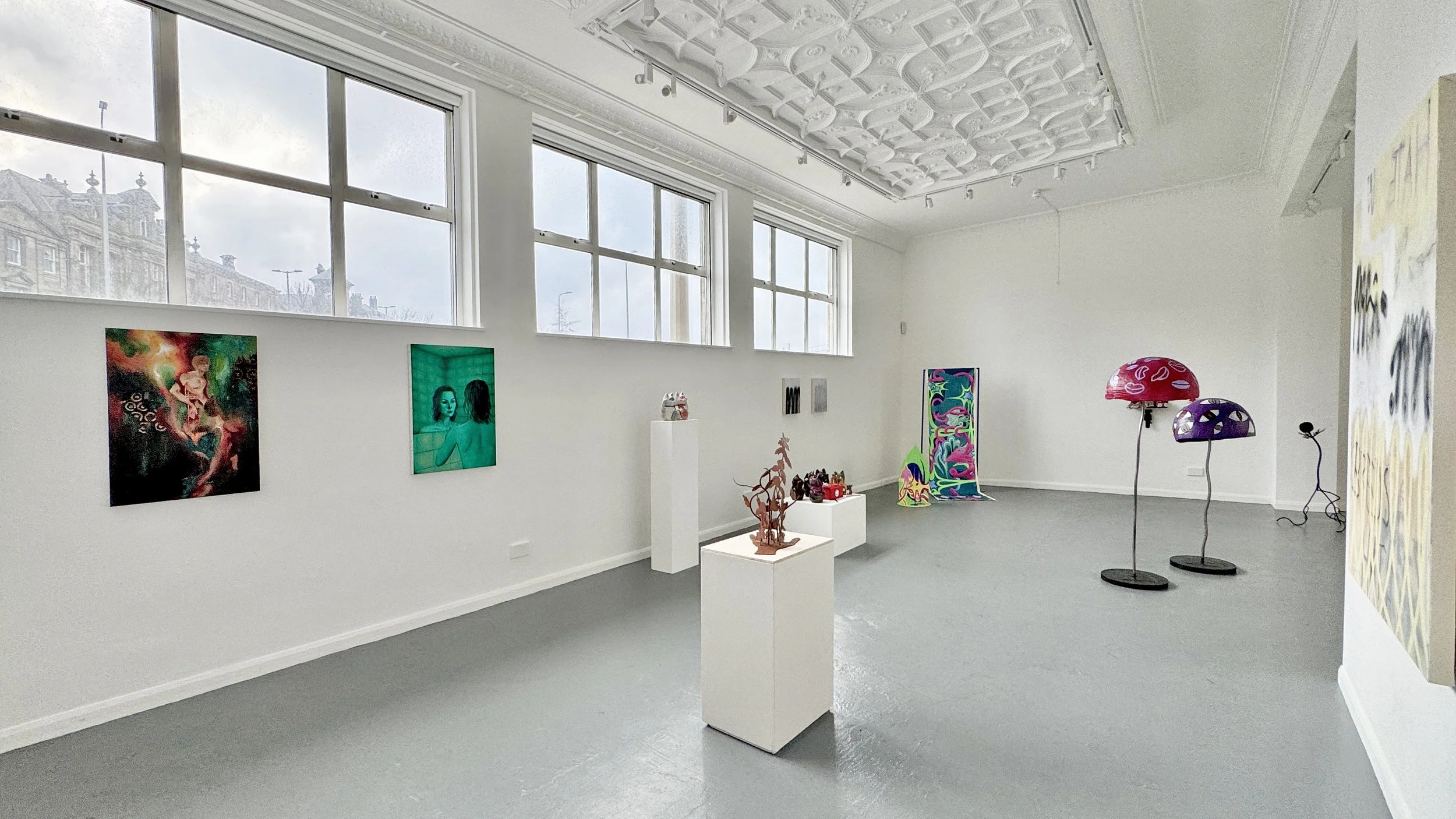
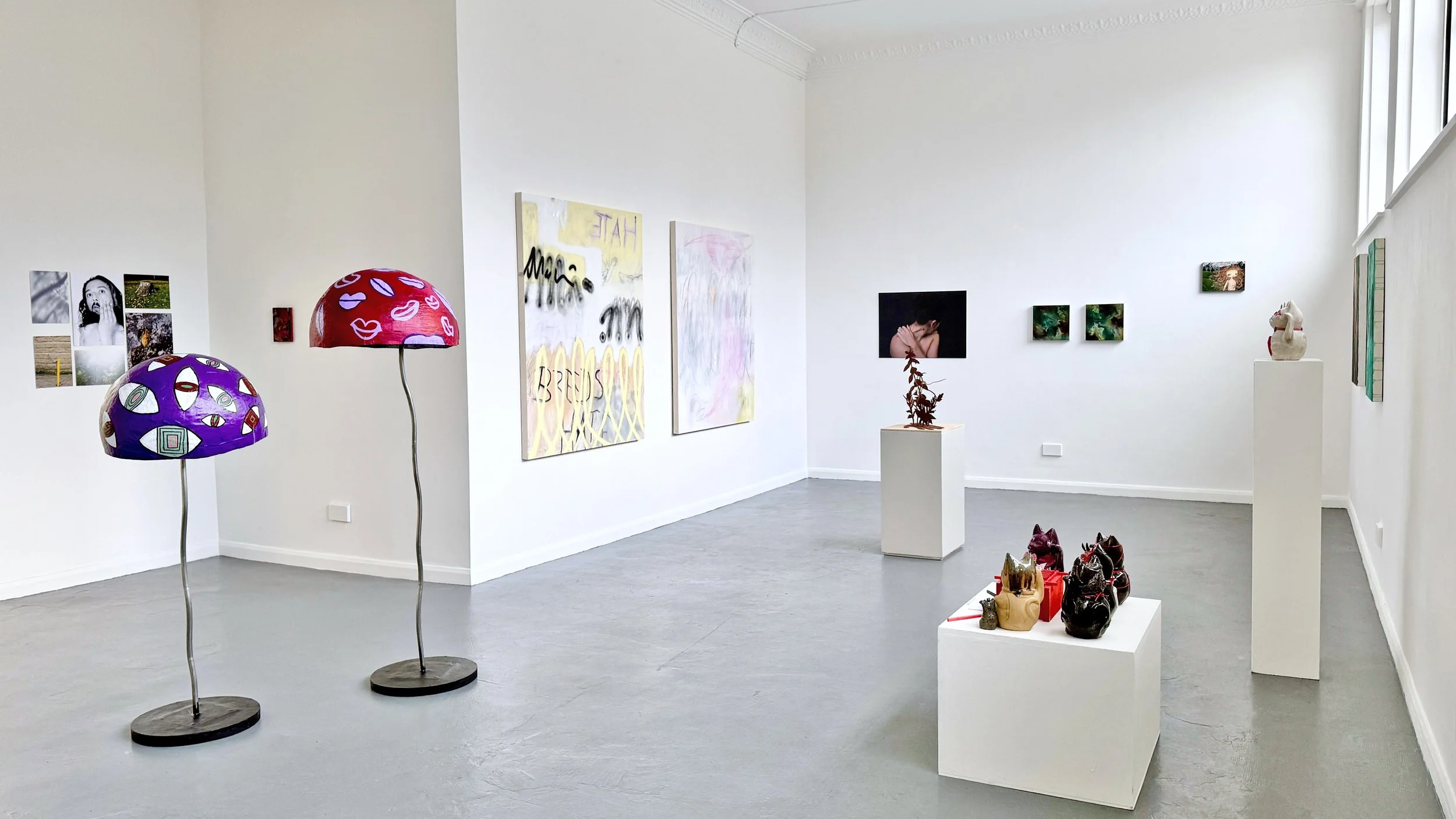
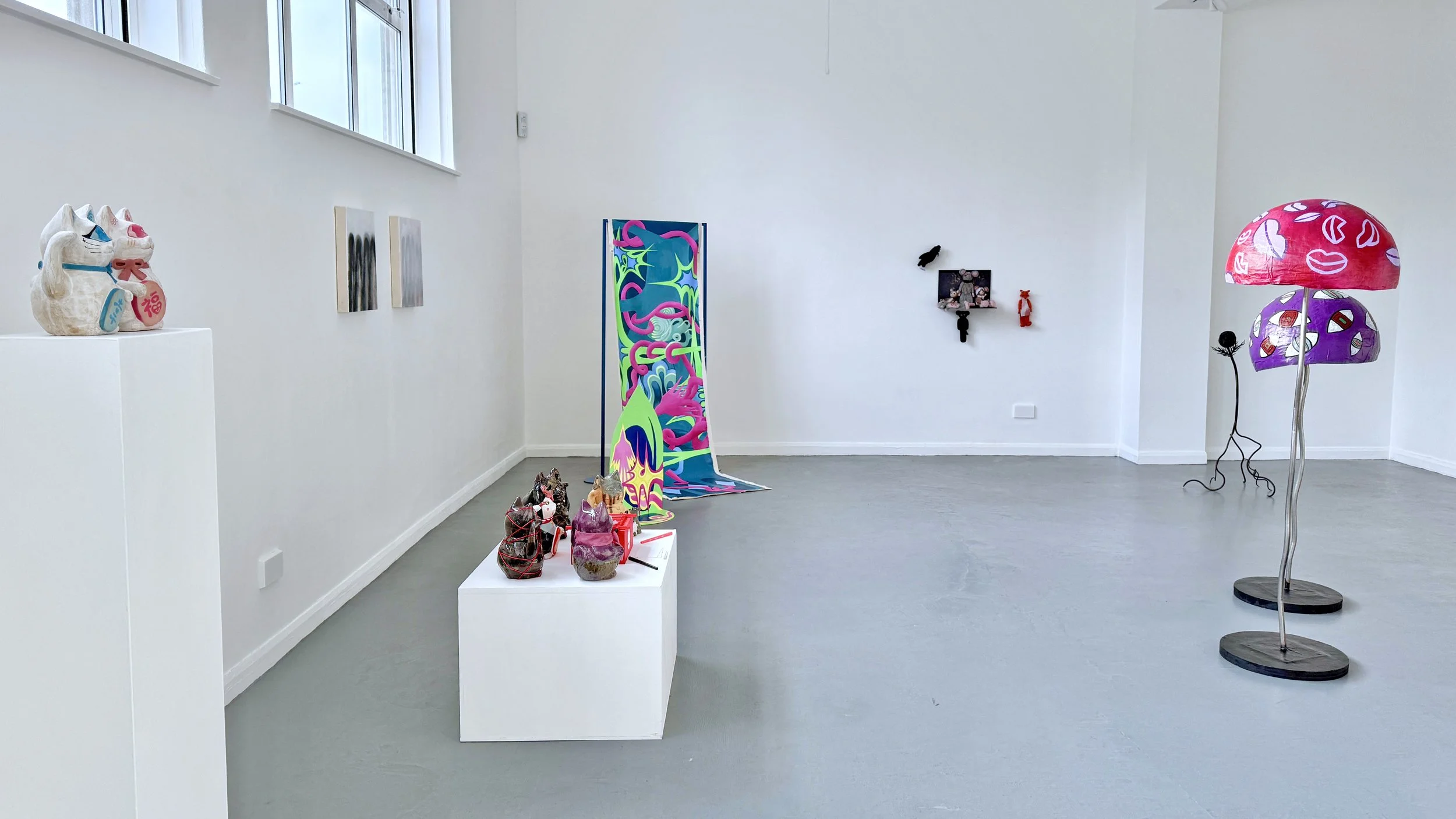
‘Indivisible’, 2026, installation view
Rachel Blackwell, Mark Bletcher, Lauren Cavagan, Ellen Cherriman, Amy Coyne, Anam Khaleel, Alexandra Lee, Natalie Martin, Camilla Ng, Nzanthung Odyuo, Bonnie Posch, Ashwin Sharma, Gráinne Sweeney
‘Indivisible’ is an exhibition that has been developed by current MA and MFA students at Newcastle University as part of a module exploring exhibition-making as an integral part of contemporary art practice. It brings together a diverse range of work by thirteen individuals under the unifying banner of the EarthFlag. Its deep blue colour (RGB 0, 74, 181) reflects the composition of the Earth’s surface — 29% land and 71% water — while the central Seed of Life motif symbolises unity, transformation, and the expansion of consciousness. Together, these ideas remind us that every act of making, like every living system, is part of a greater whole. For practical purposes… we’re interconnected.
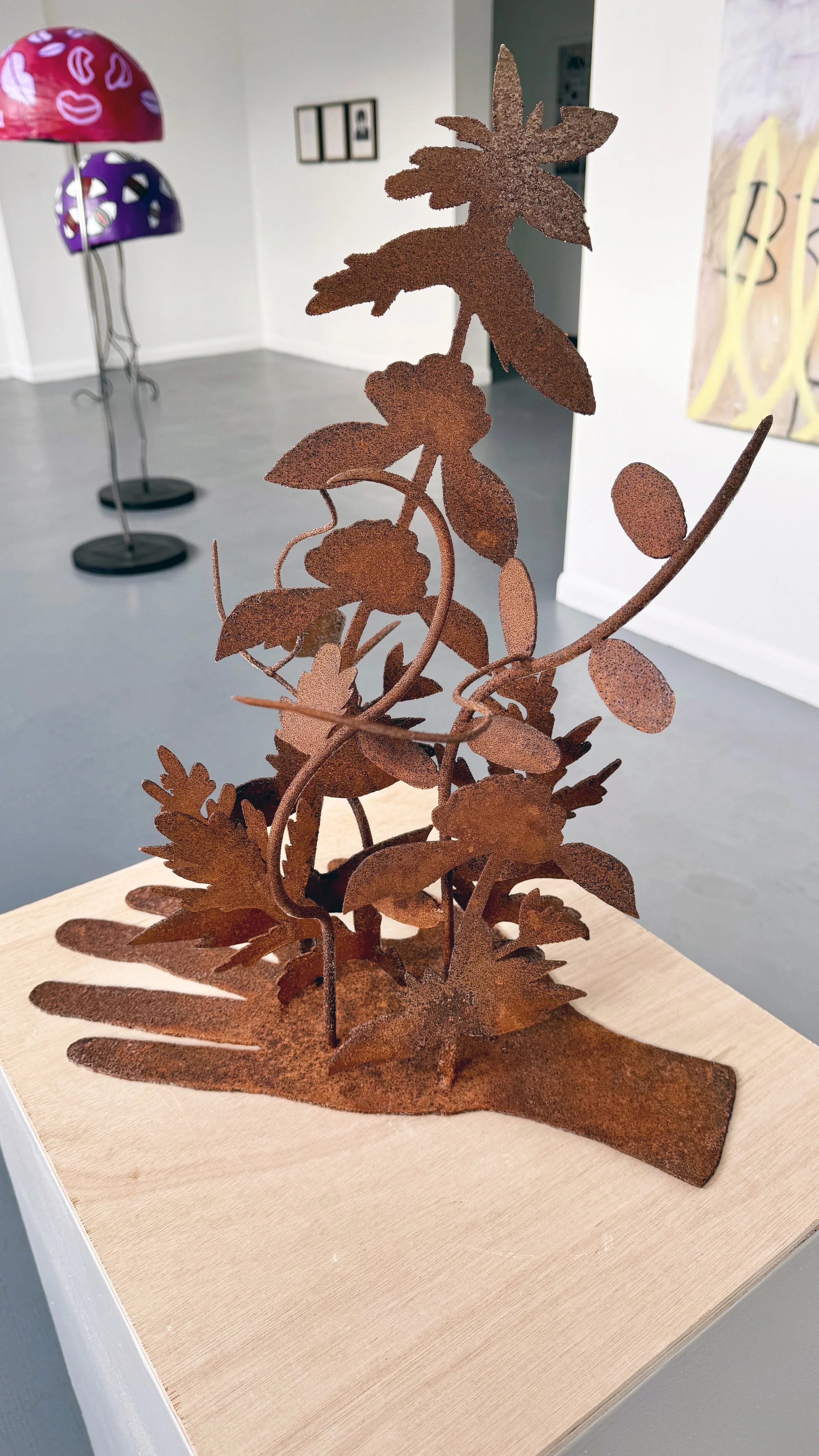
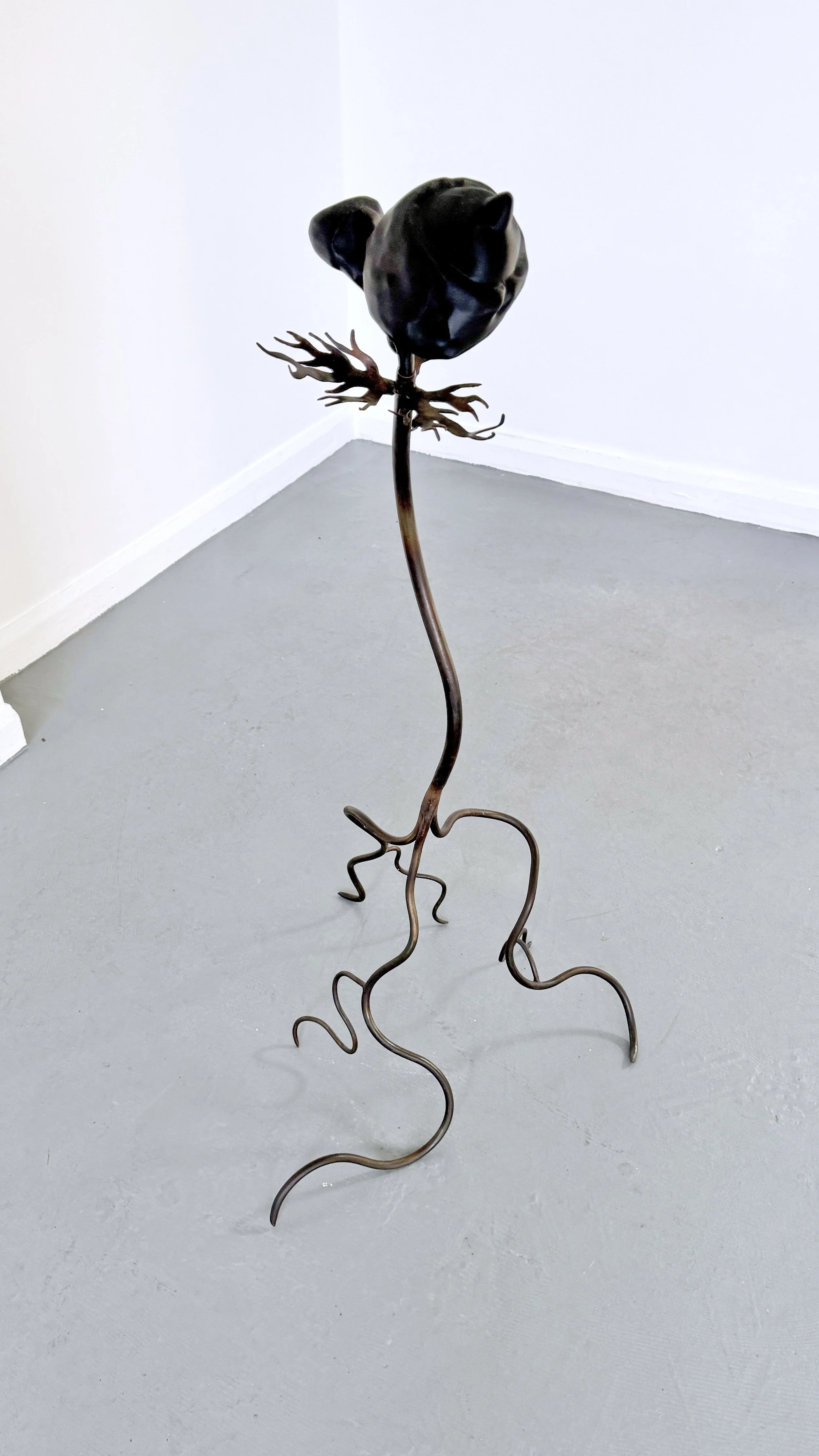
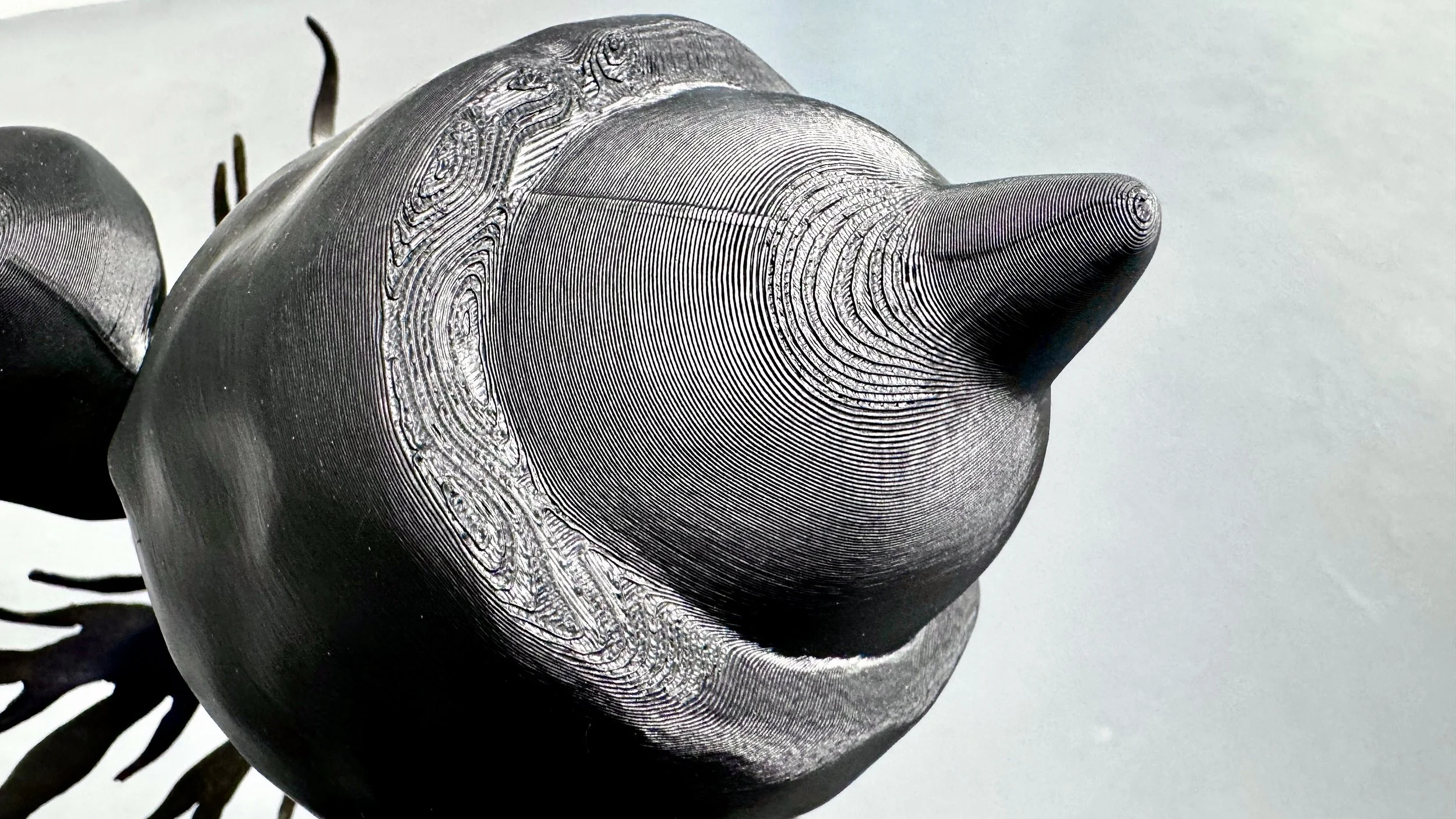
Rachel Blackwell works predominantly in cast metal, making ambiguous and biomorphic sculptures, partly ecological and partly animate to create a sense of slippage between natural history and myth. This idea of ‘slippage’ between categories, states, or worlds underpins much of her work.
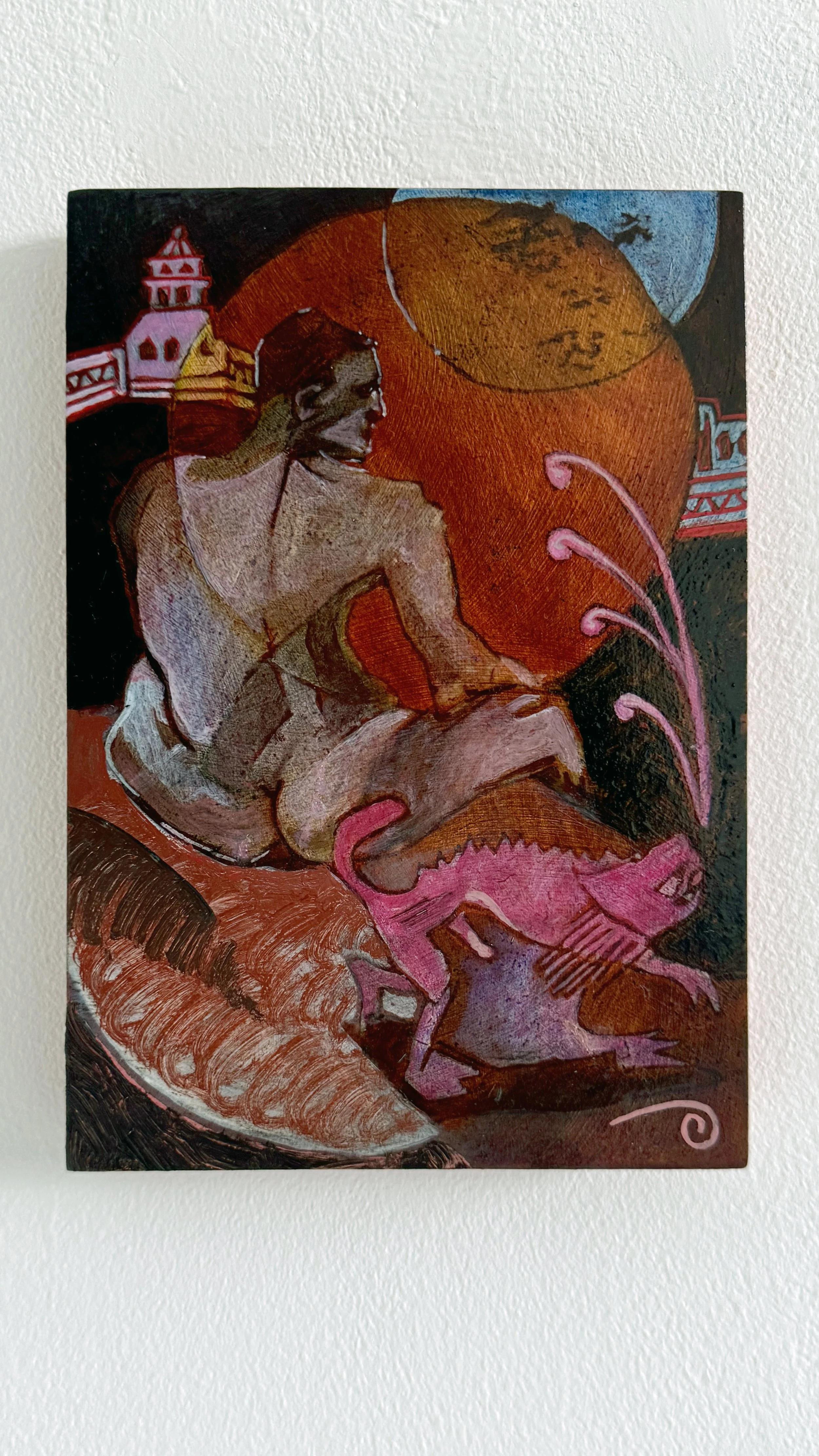
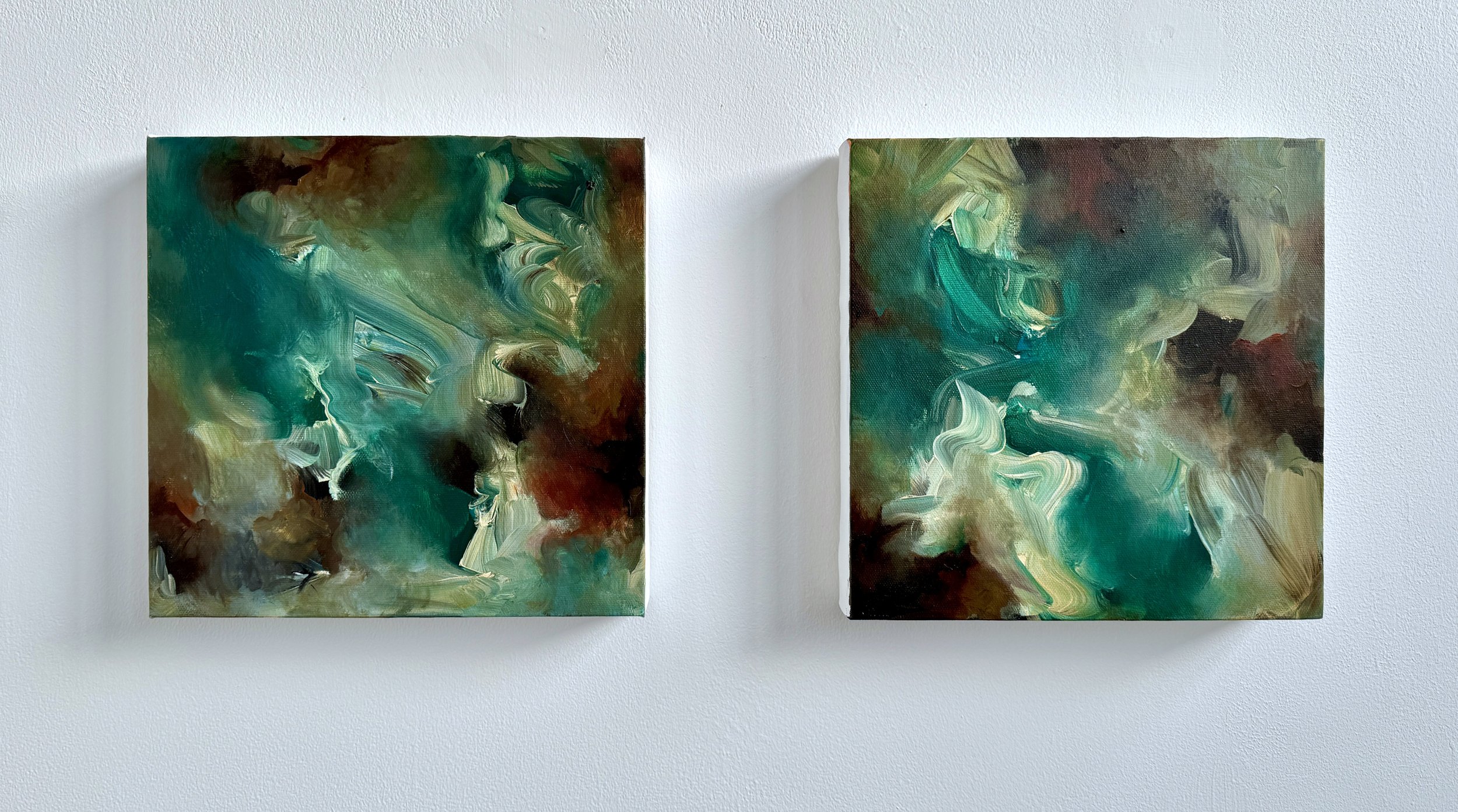
Mark Bletcher creates dream-like scenes that are staged in uncanny compositions from observational drawings. They act as portals between reality and our collective imagination, expressing a magical-realist perspective on representational painting. Using a meticulous, slow process, images are simultaneously obscured and revealed through layers of pigment and glaze.
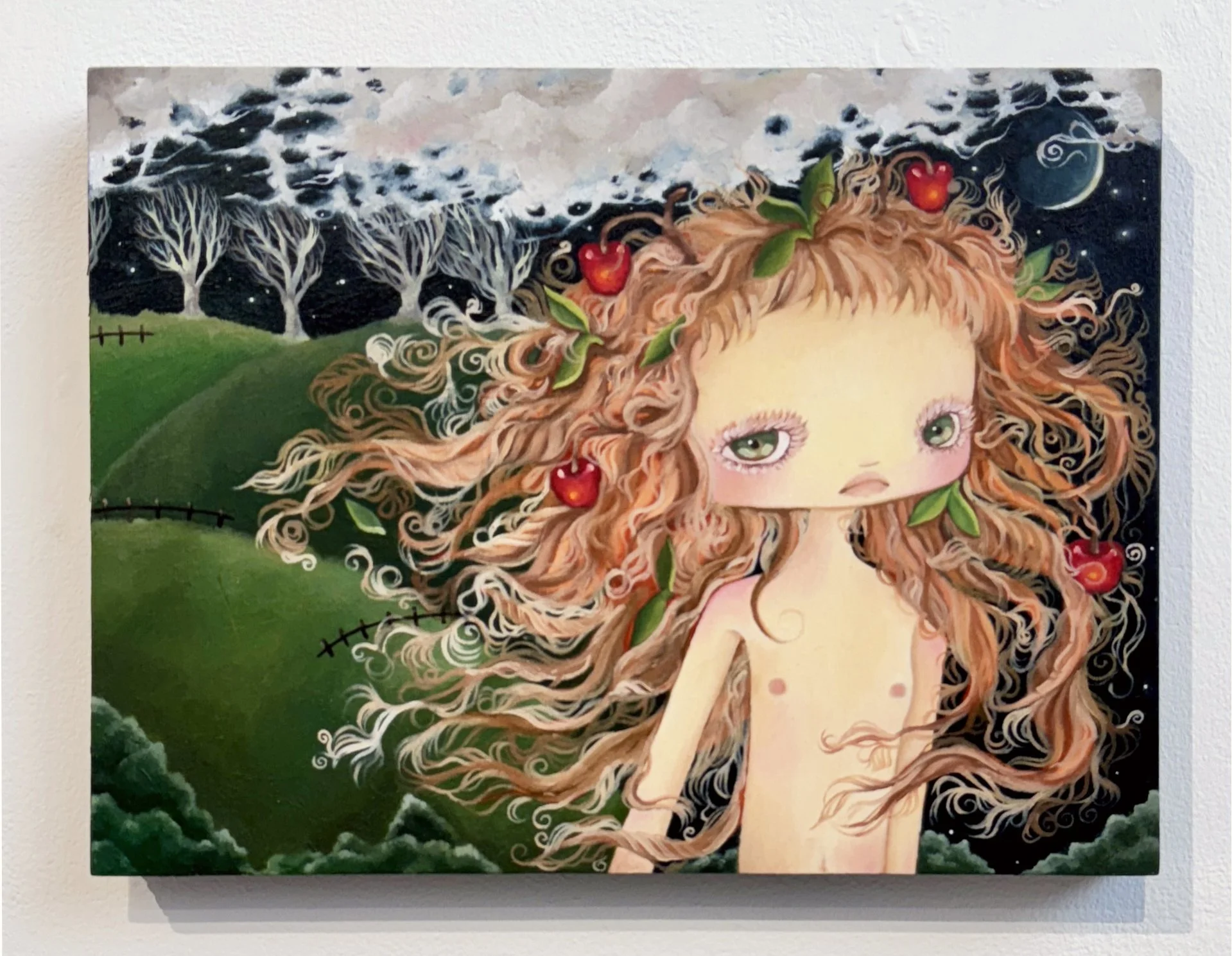
Lauren Cavagan explores the realm of folklore and fairy tales in her illustrative oil paintings. Through the reoccurring character of the young girl her work takes the viewer on a journey through hidden forests, meeting strange and whimsical animals who may not be what they seem.
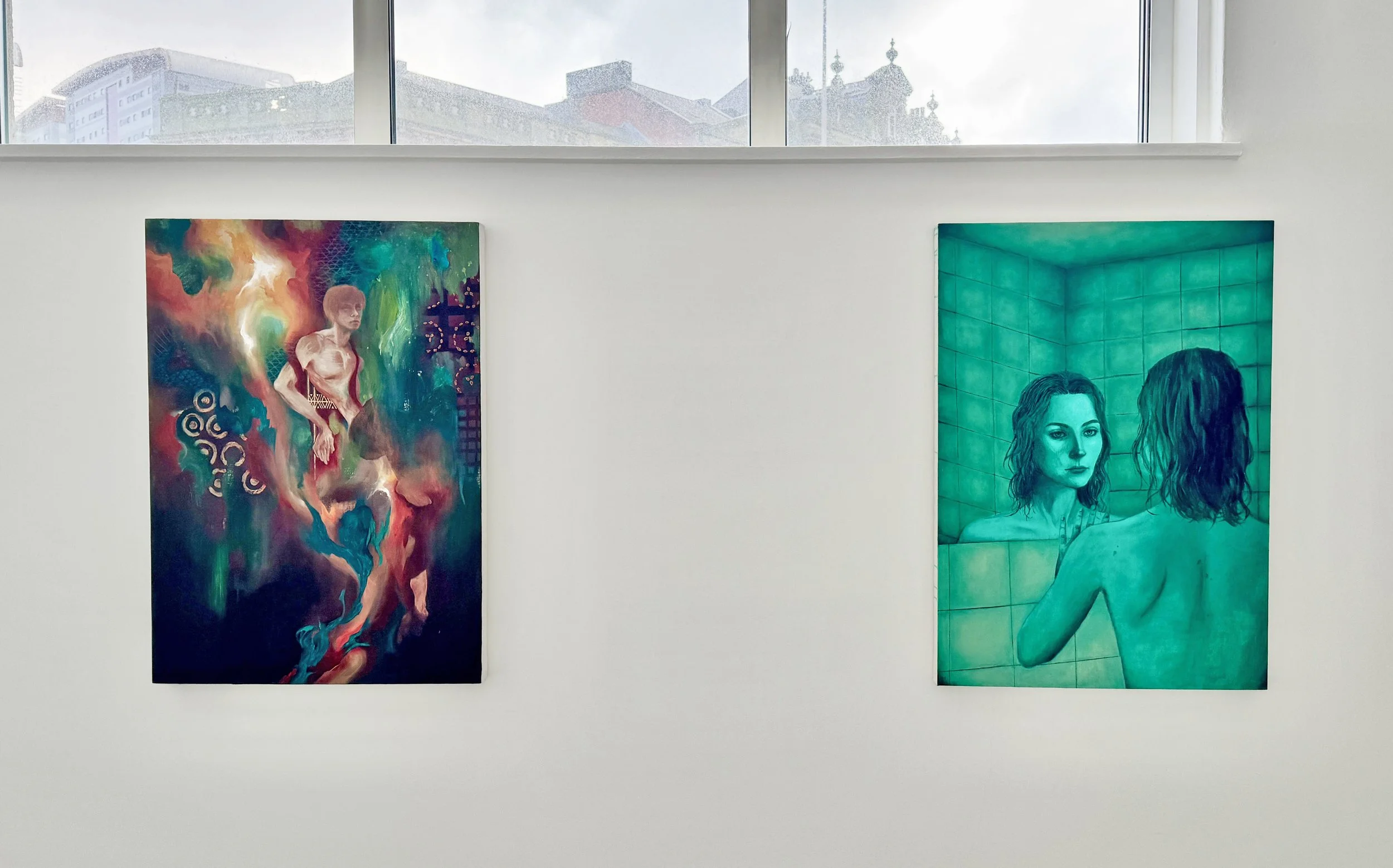
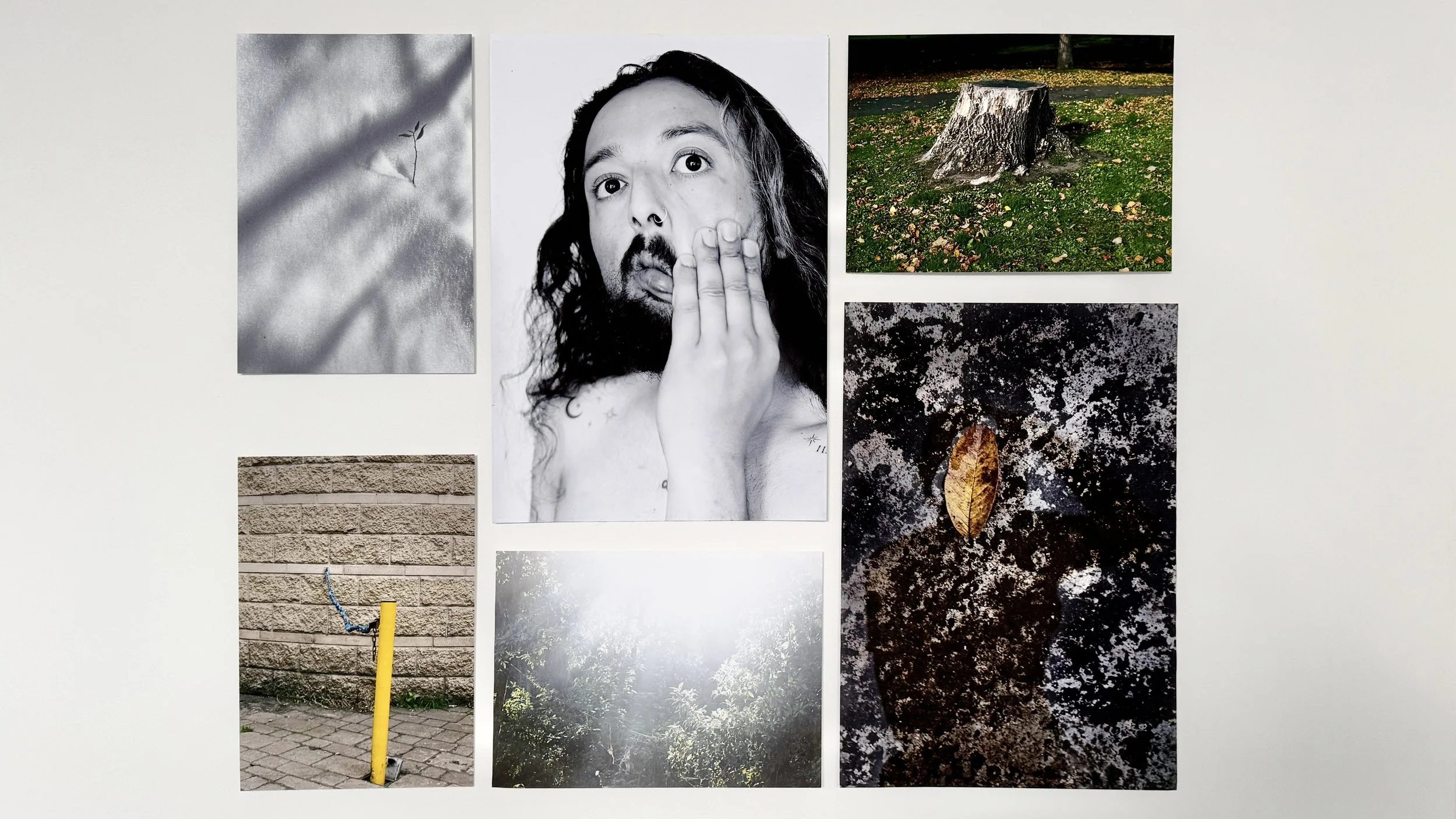
Ellen Cherriman’s work predominantly examines the human figure, delving into themes of the oppression of female sexuality, domestic relationships, and the complexities of human connection. Here, she turns inward in a self-study that confronts vulnerability, intimacy and identity.
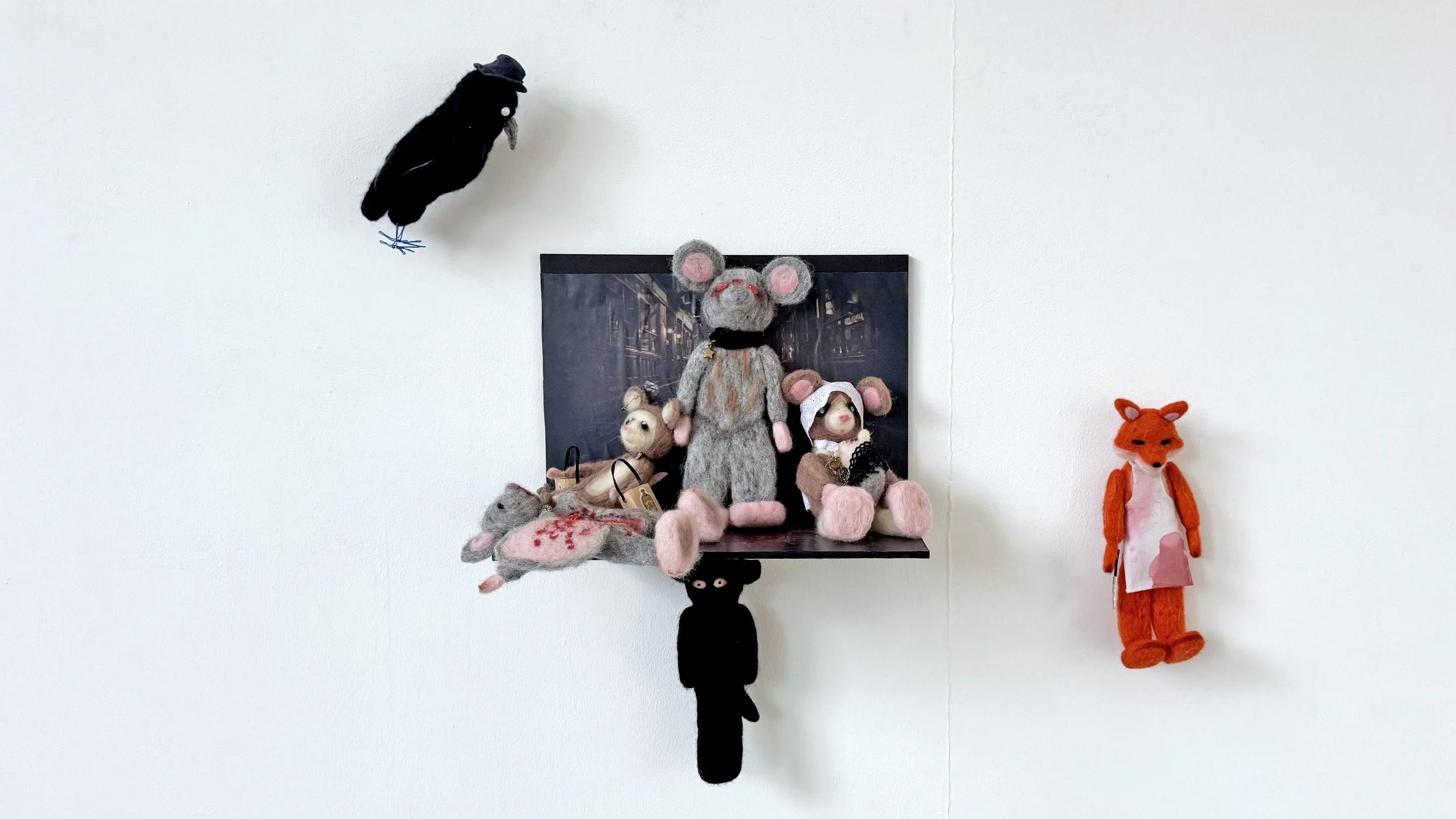
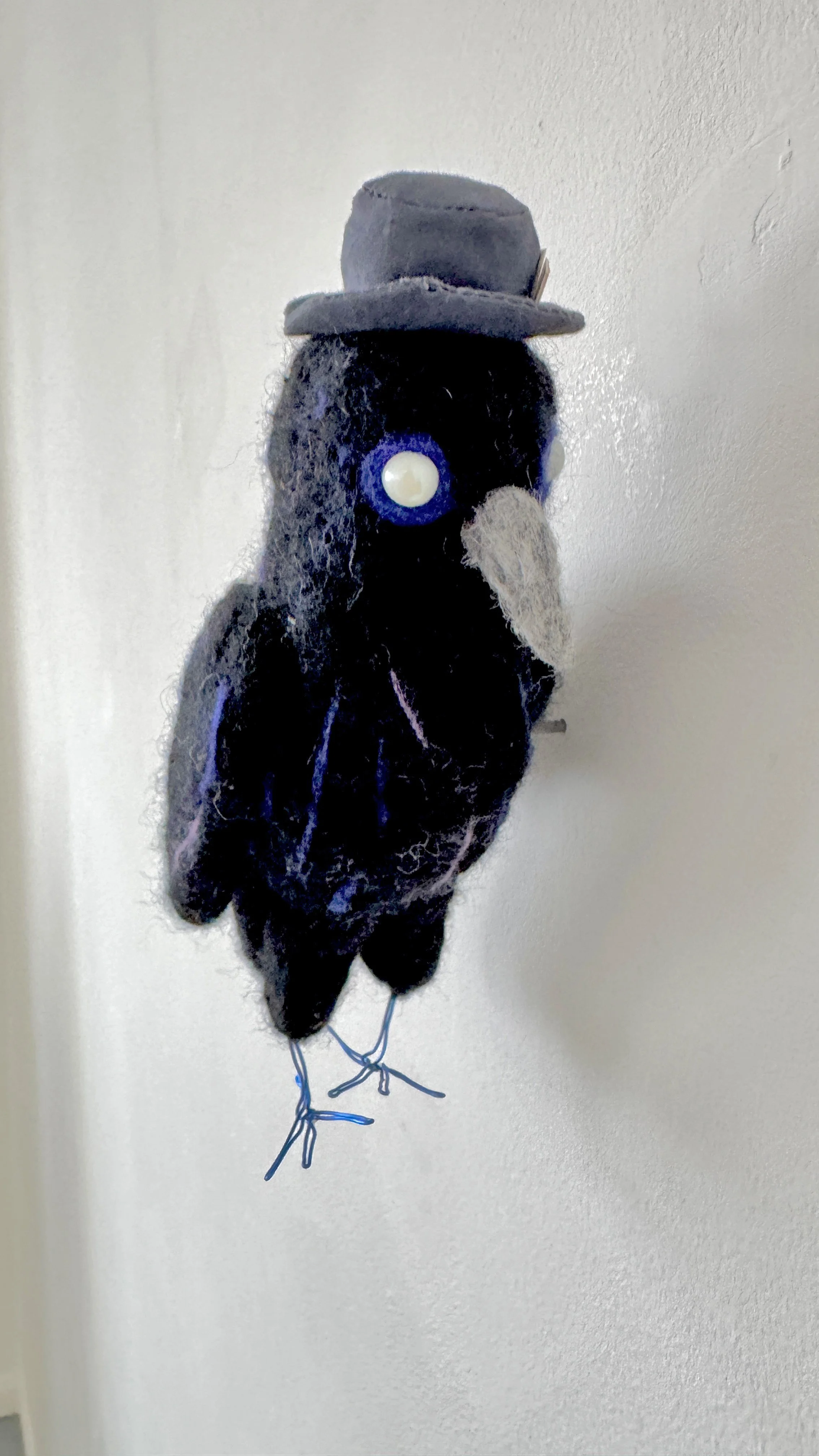
Amy Coyne is a felt artist and filmmaker whose work explores the tropes and controversies within horror and crime cinema. Her current creations feature in her upcoming short film Crowbait, a haunting exploration of society’s fascination with death and the media’s exploitation of the human body.
Anam Khaleel process involves bringing to life elements from her acrylic paintings into three-dimensional forms. With a background in Psychology, her art focusses on pieces that are inspired by past experiences, memories, and emotions. She starts by isolating aspects of her paintings, replicating them in media such as clay, wire, cardboard, or linocut prints.

Alexandra Lee’s multidisciplinary practice, rooted in portraiture, weaves photography, sketching, painting, sculpture and film together, encompassing explorations of identity and imagination. Informed by historical art, folklore, gothic aesthetics, music and film, she aims to create works that reflect the essence of her subject and her gothic inspirations.
Natalie Martin’s practice explores the human condition through painting. Questioning the urge to find meaning in our existence through the influence of religion, folklore, and mysticism, Martin weaves architecture, figurative elements along with flora and fauna to offer an exploration of the anthropological longing for connection to the sacred.
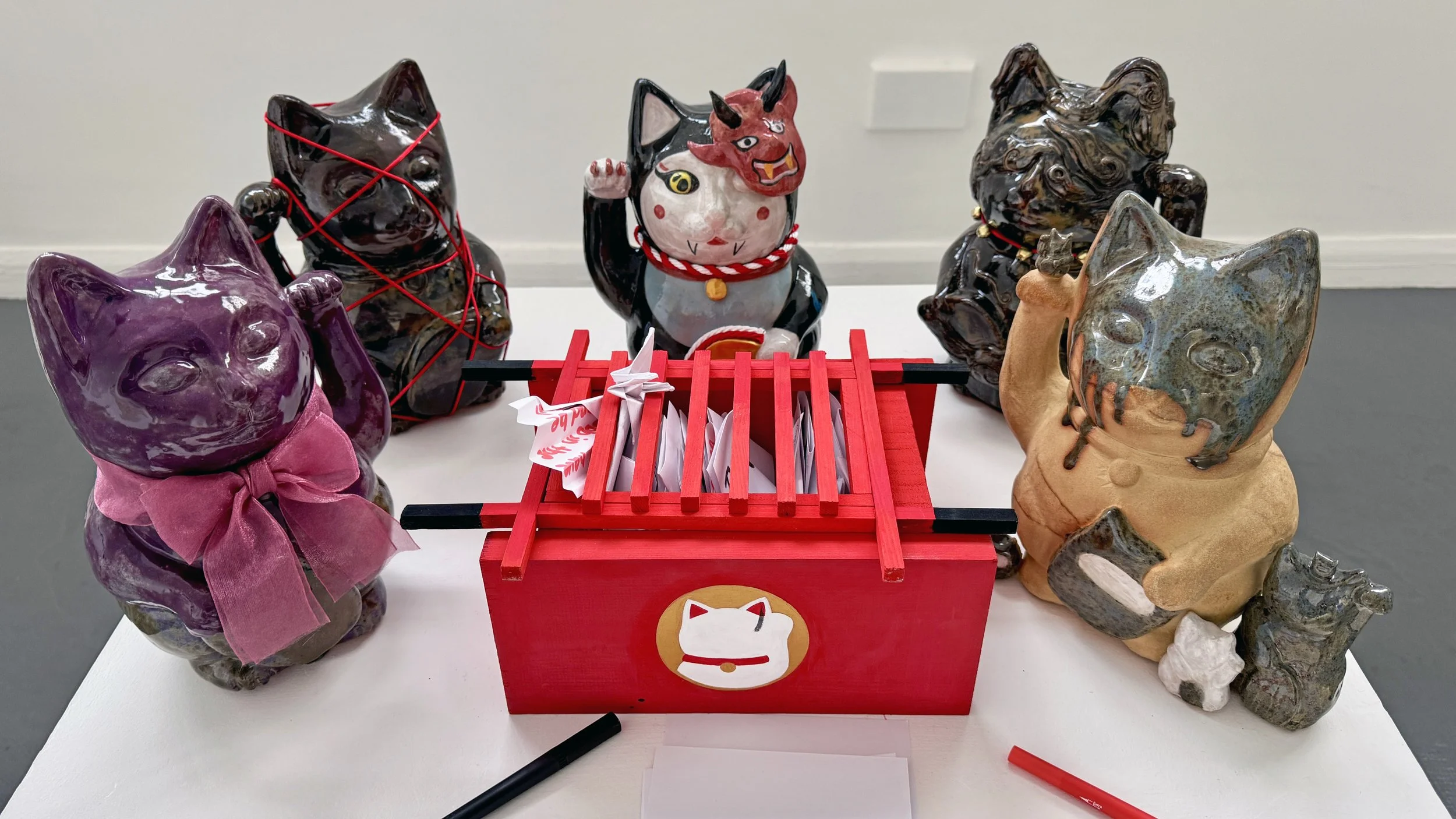
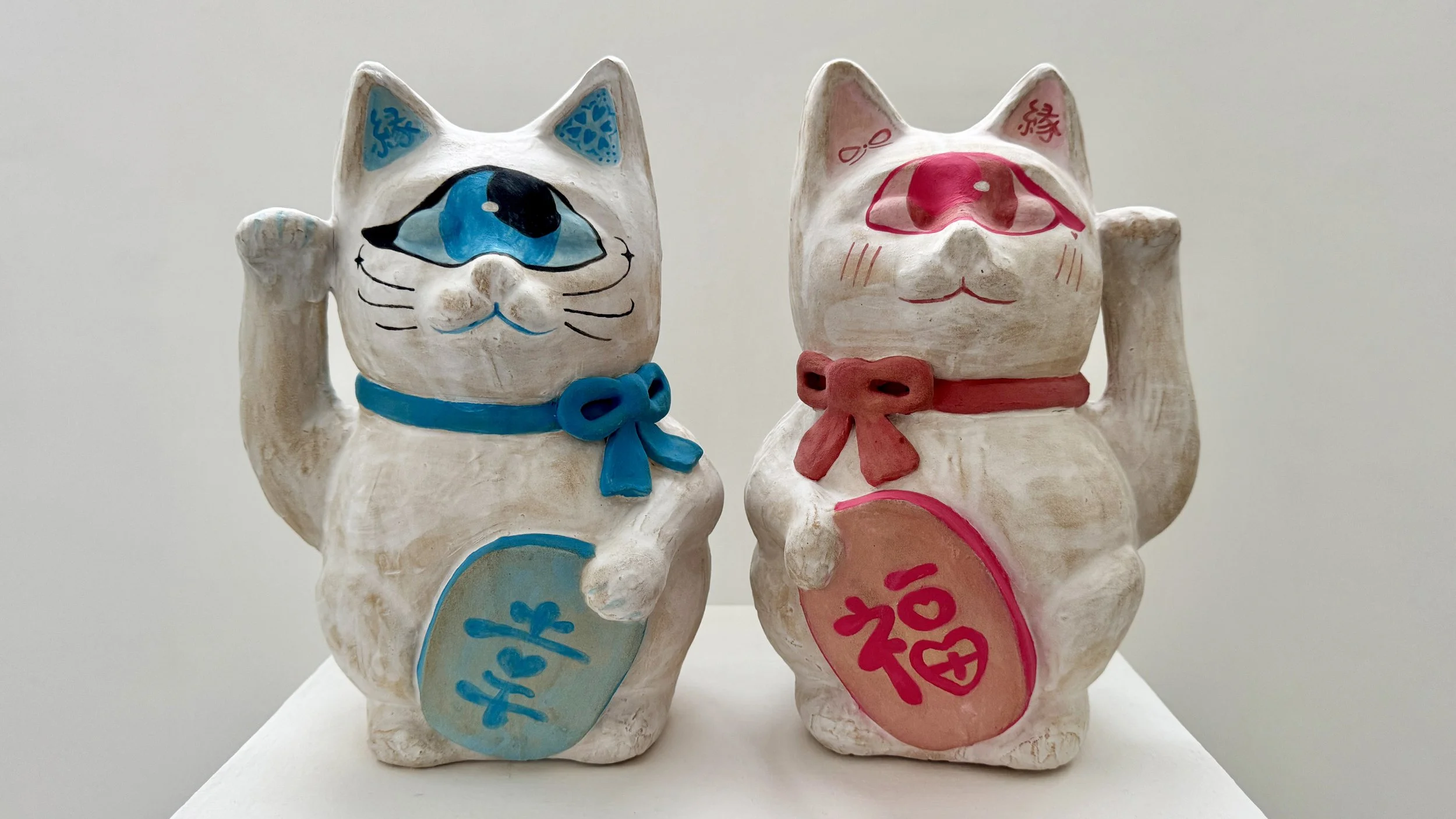
Camilla Ng grew up in Hong Kong where the cat is a symbol of comfort and good luck. Ng’s work reflects childhood memories of a quiet belief that small gestures invite hope and protection. In this exhibition, her work contemplates how unseen wishes connect us beyond words.
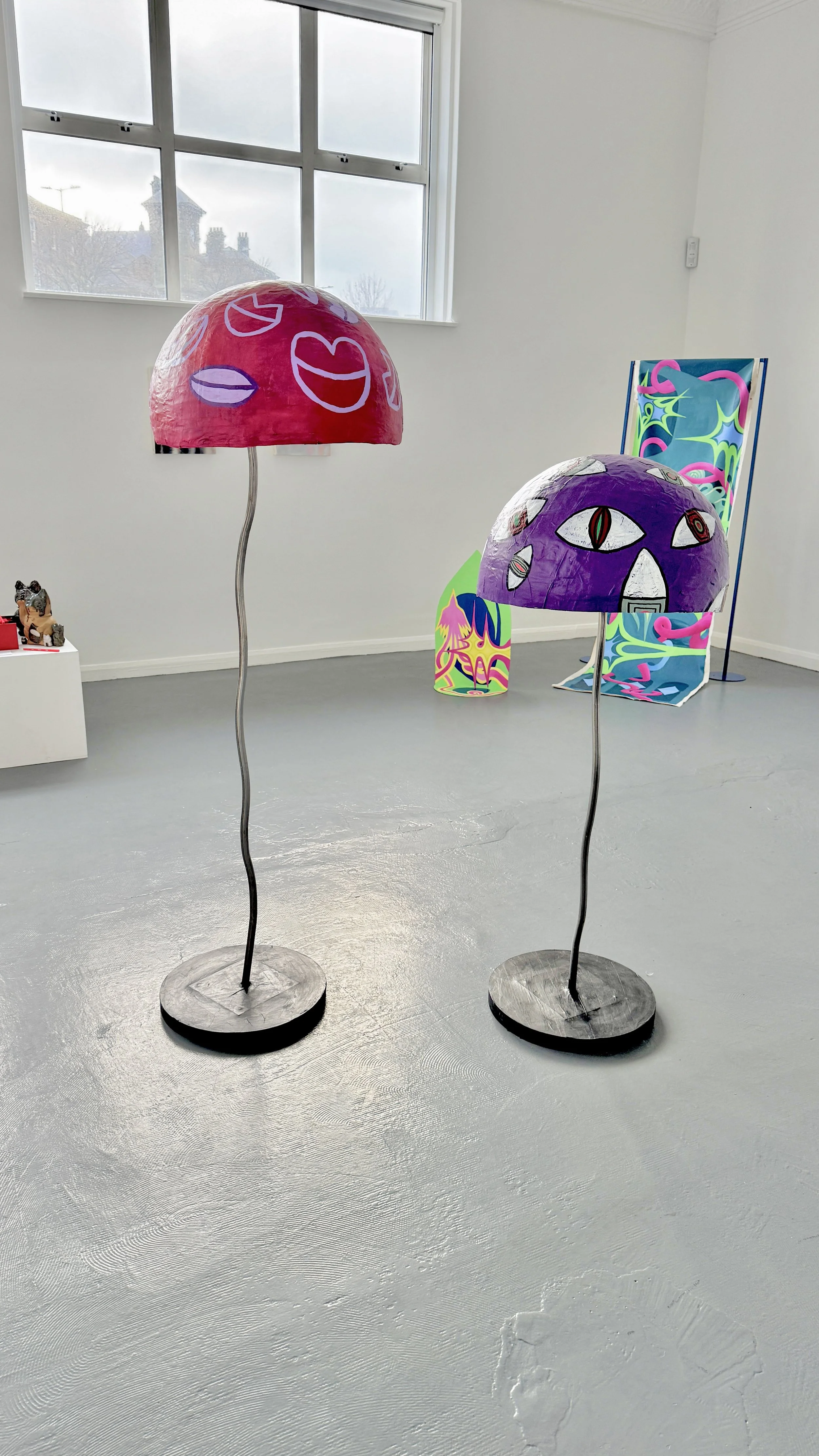
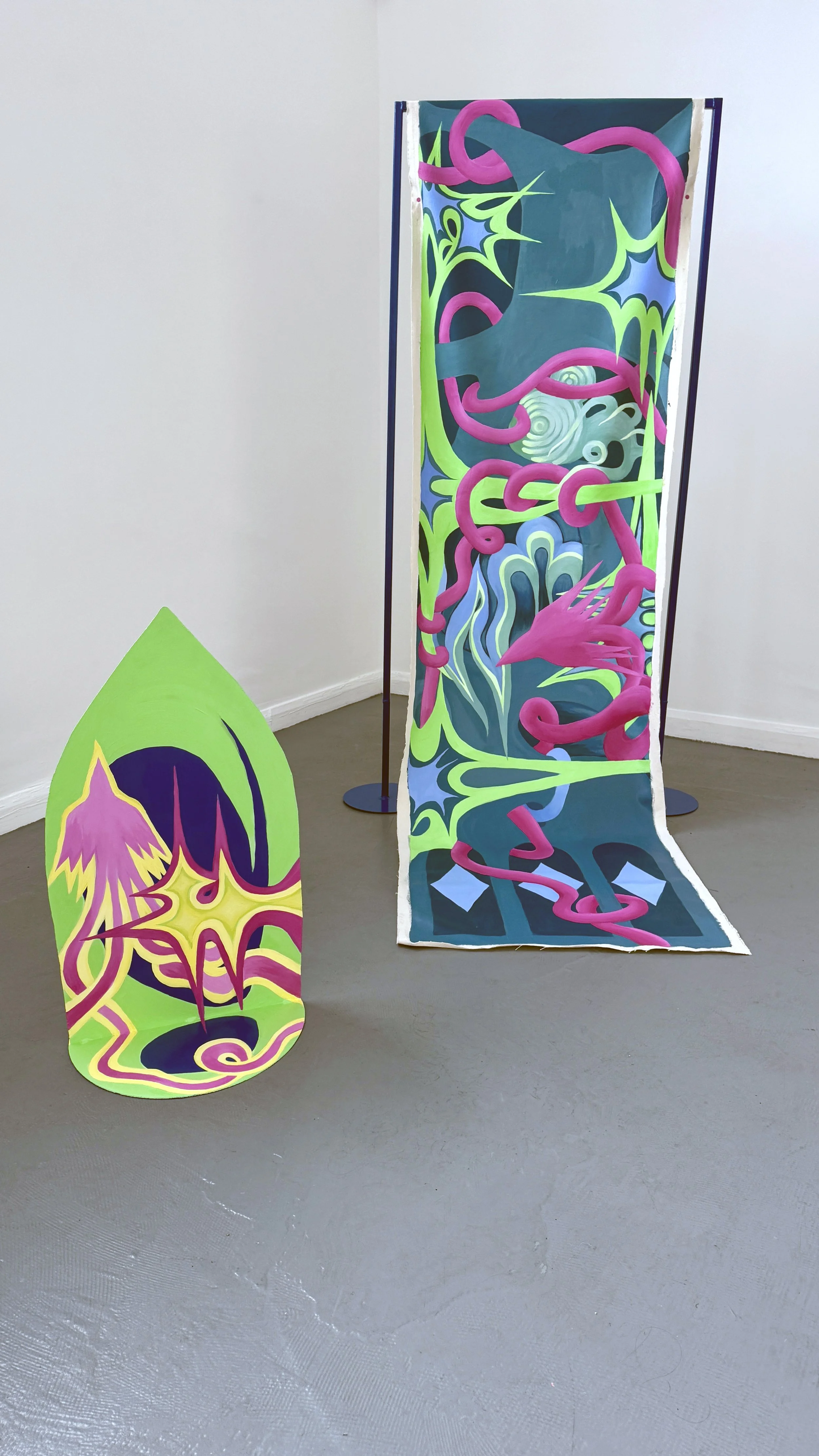
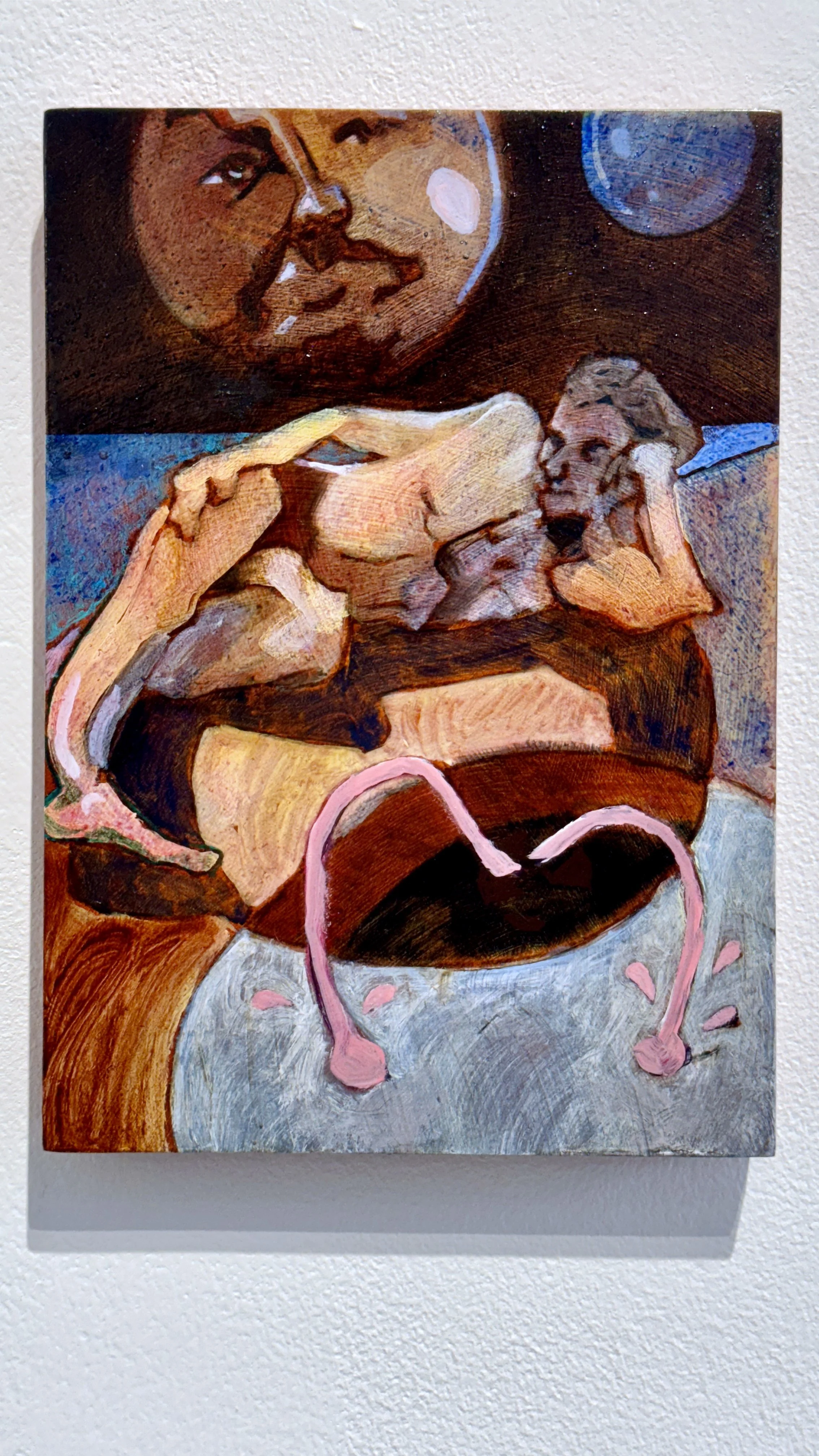
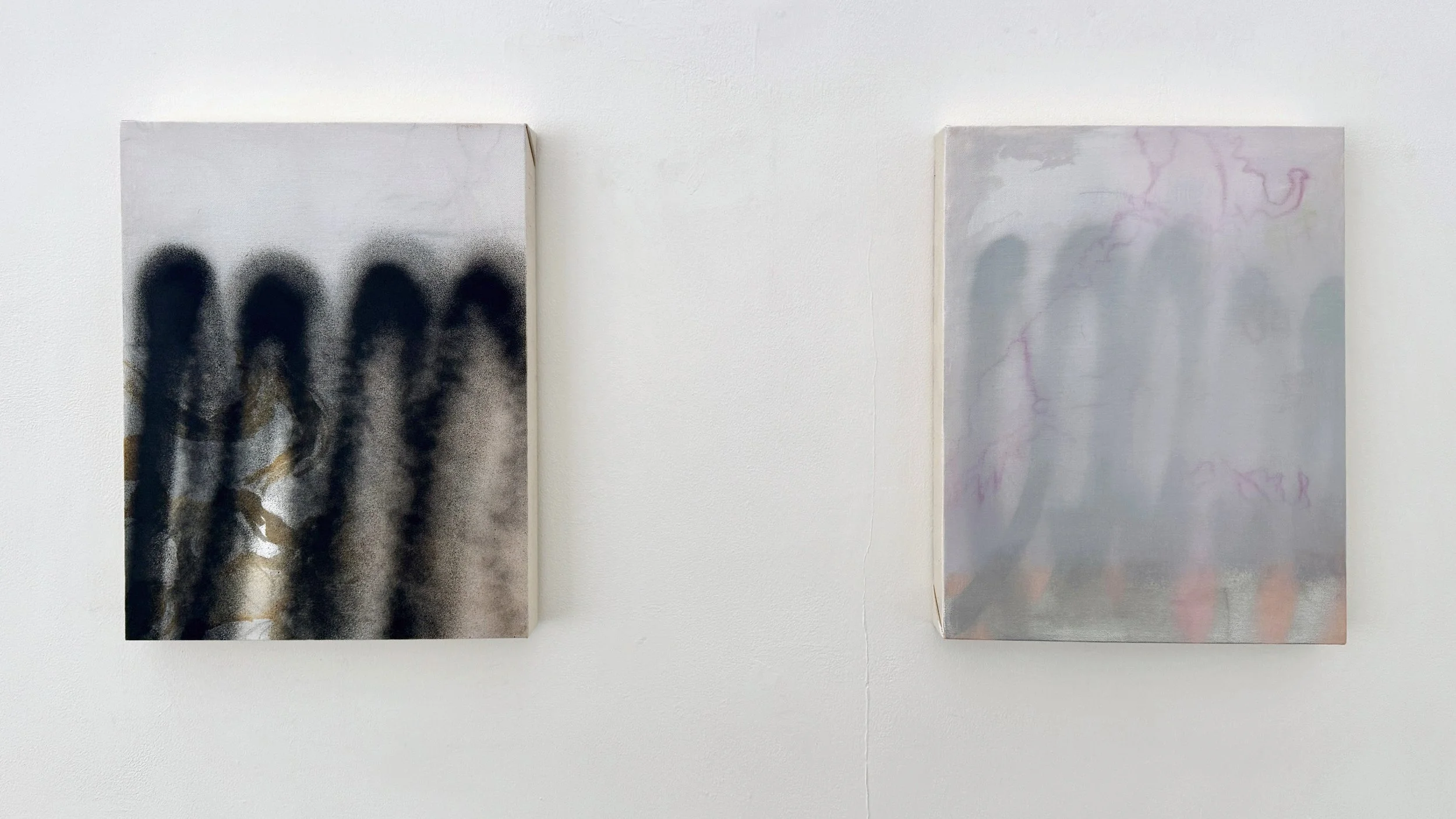
Nzanthung Odyuo’s work explores memory as something fluid and alive rather than a fixed narrative. Rooted in the oral traditions of the Nagaland region of India, he paints the fragile afterimages of memory that oscillate between clarity and blur through the language of indigenous pattern and texture to reflect how stories and identities shift through retelling.
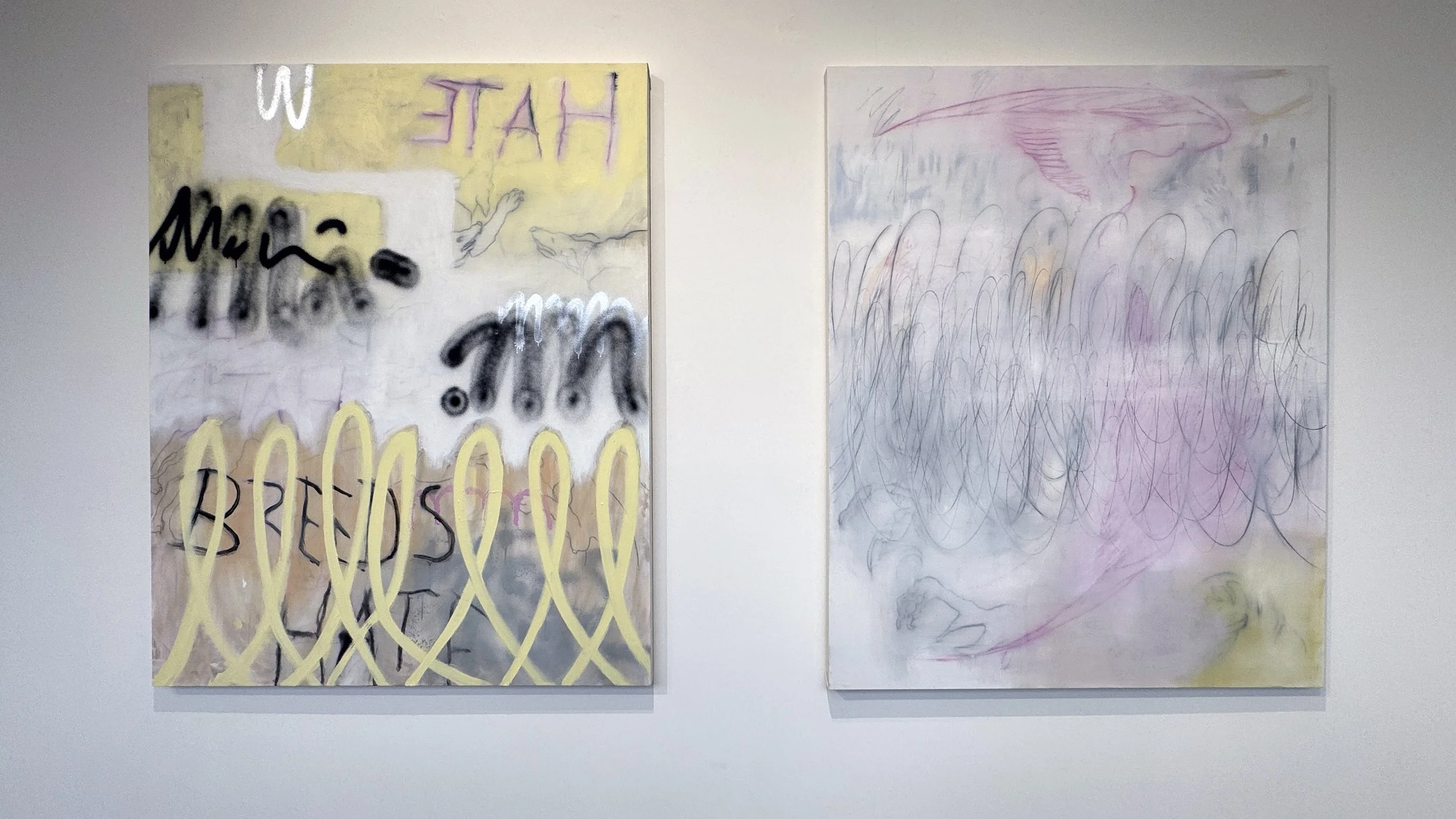
Bonnie Posch is a visual artist whose paintings explore the beauty within the ugly. Her work is known for its cheeky, experimental, and airy style, often delving into universal human experiences such as violence, conflict, and desire, inviting viewers into a playful yet unsettling sensory dialogue.
Ashwin Sharma’s work is guided by ethics of reflection. Each photograph, each story is a part of a larger spectrum with dialogues between the past and the present, between the personal and political. They see photography as a practice of care and responsibility, a way of honouring memory while imagining possibilities of the future.
Gráinne Sweeney records overlapping personal and cultural histories through layering words, images, ephemera, and contemporaneous fragments with line, gesture, and colour. Working across media, her work reflects her experience as a curator and archivist, exploring how acts of gathering, preserving, and reinterpreting might translate into visual and material form.
Grainne Sweeney, A Portrait of the Artist as a Young Man, 2016-2025, mixed media: invisible matt Sellotape™, photocopy paper, catalogue pages from The Robert Mapplethorpe Collection (Christie’s 1989)
Take a video tour of the exhibition
Share this page